All episodes
Anthony Pierri
Founder at Fletch PMM
Positioning is a decision, not a tagline & the truth behind the AI hype
Teams our guests have shipped with






5 free onboarding UX fixes you can ship next week to convert more trials



Order your free video audit
12+ years of experience (ex-Zapier)
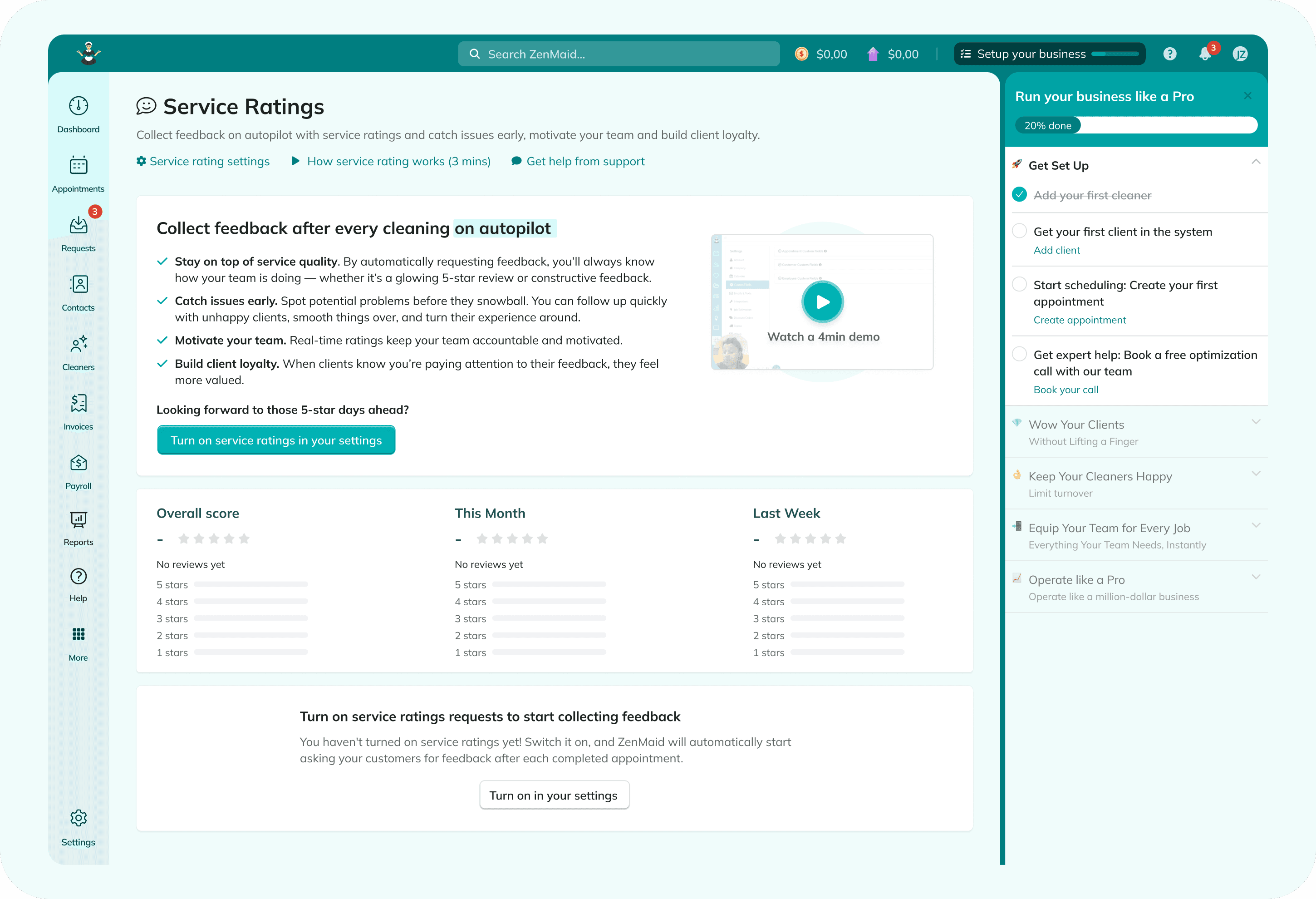
Helped ZenMaid grow from $1M to $5M ARR
If you're a SaaS founder who keeps rewriting your homepage and it still doesn't feel right, this episode is for you.
Anthony Pierri is the co-founder of Fletch PMM. He and his team have run their 2-week positioning sprint around 500 times for B2B software companies, which probably makes them the most experienced positioning consultancy out there. He's also one of the clearest, least jargon-filled voices on LinkedIn when it comes to marketing.
We spent an hour going deep on what positioning actually is (and isn't), why so many founders are stuck running five go-to-market motions at once without realizing it, and what happens when you make a real repositioning bet — with stories from Klaviyo, Anthropic, a trucking analytics company, and even Taylor Swift.
We also got into AI — specifically, what Anthony discovered when he stopped using chatbots and went deep into Claude Code. His take is the most grounded I've heard in months.
No fluff. No frameworks for the sake of frameworks. Just one of the sharpest operators in B2B marketing talking shop.
🧠 What you'll learn in this episode:
0:00 - Why most positioning exercises fail (and why Anthony is renaming his sprint a 'decision-making sprint')
01:32 - Why Fletch ends every sprint by rewriting the homepage — even for companies where the homepage barely matters
06:41 - Positioning vs messaging vs copywriting explained in 90 seconds
08:58 - Why founder intuition + research both matter (and how to use each)
12:22 - The firmographics trap: why your target market isn't 'companies with 50 employees in North America'
17:30 - Why niching down isn't the only move — sometimes you reposition broader (with the Anthropic vs OpenAI example)
22:11 - The trucking analytics story: how one repositioning call saved a company from going out of business
28:24 - Why you can't A/B test a positioning bet (and what Klaviyo did instead)
36:28 - The Taylor Swift principle: your existing customers will only ever confirm what you've already done
42:56 - What Anthony learned going deep into Claude Code that broke the AI illusion for him
46:47 - Why AI is closer to a smarter Zapier than a white-collar replacement
💡 Steal these quick wins from Anthony
Test your positioning by putting it on the homepage
Not a Google Drive deck. Not a Notion page. The homepage. It's the one asset everyone in the company has to live with publicly, which is exactly why agreement on it sticks. If your team can't agree on what should go on the homepage, you don't have a positioning problem — you have an unresolved strategic decision.Stop defining your target market by firmographics
Company size, headcount, geo — none of these signals tell you whether a company actually needs your product. If you're trying to win five use cases inside one customer segment, you're running five different go-to-market motions in parallel. Pick the one that ladders into the biggest opportunity and lead with it.Don't validate a reposition by asking your best customers
They came to you for the old story. They'll tell you not to change. Customer research is one input — not the only one. The bet sometimes requires alienating who you have to win who you want.Stop treating chatbot output as real work
Anthony's experiment: dropping 20 sales call transcripts into a chatbot got him a summary in 10 seconds. Looked great. Then he wrote a detailed instruction file for the AI on exactly how to summarize one call — took 2 hours to build, 5 minutes to run on a single call. The realization: the fast chatbot version was producing something that looked plausible without doing the work. If you're using AI for anything where accuracy matters, the painstaking version is the real version.Build for where the AI is going to actually be useful: smarter automation
Don't build your strategy around AI replacing your team. Build it around AI replacing the slow, manual workflows that already exist (the stuff you'd otherwise build in Zapier or hire a junior to do). That's where the real productivity lives today.
—
Intro (00:00)
Jim Zarkadas (00:00): Hey, I'm Jim, and this is the Love at First Try podcast — a podcast for SaaS CEOs and developers that truly want to learn more about design and care about it, but there are no designers [and they] find it too complex. In every episode, we discuss how to design products that become sticky and unforgettable. We dive into the topics of taste, UX, growth, and conversions, and we share practical tips and frameworks you can add into your development process. Enough with the intro — so let's dive into today's episode.
Jim Zarkadas (00:27): [Thanks] again for coming to the podcast and making the time today. As I said before, the first thing we do is start with an intro about who you are, what your story is, how you got started and what you're focused on right now. Since you're into the service business and you're providing a service, what are the exact companies you're helping at the moment? You could say in a more technical way — what is your ICP? The ideal customer profile.
Who Anthony is and what Fletch PMM does (01:03)
Anthony Pierri (01:03): My name is Anthony. I'm one of the co-founders at Fletch PMM. We are a pretty boutique positioning consultancy. We work mainly with B2B software companies, kind of at all sizes. I'd say the bulk of them are probably startups, maybe Series A, Series B, but we'll go smaller than that earlier in the journey or much larger, like bigger enterprises. And we really just focus on one thing that we do. We run this two-week positioning sprint.
Why it might be renamed a "decision-making sprint" (01:32)
Anthony Pierri (01:32): And we've thought about rebranding it as a decision-making sprint, because the point of it is to gather the core decision-makers in a business and figure out where we're going to place a bet related to our positioning strategy. That's going to maybe be what we stick with for the next year at least, maybe two years. So bringing all the best minds on the company, all the different perspectives on the product and the market where we feel like the opportunity lies, and then we help them figure out what bet they're going to make.
Anthony Pierri (02:01): And then the second piece is we say, let's document this strategy, let's get the messaging down of what are the things that we would need to say to make it make sense. Really, who is the target market? What's the problem they're facing? How do we explain our product or service in a single sentence? And then what are the core pillars of things that make that believable — we would call them the supporting arguments. And then we get that documented in a deck. And from there we say, okay, it's one thing to align on the strategy in an internal deck, [but] we also want to get it in a public-facing way. So we say, let's take this deck and we're going to rewrite your homepage reflecting the new story that we landed on.
Why the homepage is the alignment tool (02:35)
Anthony Pierri (02:35): The reason that we use the homepage as the first, you could say, execution-related part of the positioning strategy is because there really only is one. There's one homepage with one hero section, one main headline, one or two sentences below. And so if you can get everyone to agree what goes on that one singular asset, the alignment of the team is just a lot more likely.
Anthony Pierri (02:59): There's other people who do work like us and the output is like a sales deck narrative. But for us, that feels like it's too segregated into one corner of the business where maybe the salespeople are gonna say it, maybe not, who knows what the marketing people are gonna say. But the homepage is this really public-facing asset. So keeping everyone aligned around that, when it's not buried in some Google Drive or SharePoint folder — you can just type the website of the company and there it is.
Anthony Pierri (03:28): So it's not that we focus on the homepage because it's so important in the overall scheme of things. Some of the companies that we work with, they're selling really expensive software, like six, seven figure deals. And for them, how important is the homepage? Maybe not that important. So even in companies where the homepage is not actually that important, we still bolt that part onto the process. And it's also because it really lets us know — did we actually [land] on the strategy?
Anthony Pierri (03:56): Does everyone actually believe in it? Because a lot of times people will do these exercises positioning related and they'll agree in principle. Someone will write a sentence on the board, "that's our positioning." [Everyone says], "yeah, I guess I agree with that." But then when they leave the room, everyone says different things. It's like, "yeah, [I] think it's kind of stupid" or "I don't want to do it." But again, if you can get them to agree, put it on the homepage, it's just so much more likely that they're going to stick with it and actually buy into it.
Anthony Pierri (04:26): A lot of times when we show them the copywriting, show them the wireframe of what the homepage could look like, they realize, "oh no, I actually don't agree with this strategy anymore." And we're like, "why?" And they'll be like, "well, the copywriting." And I'm like, "I don't think it's the copywriting." And then we get down to it. It's not the copywriting. It's the underlying strategy. Like if they've positioned against one competitor and we make it very clear that they're trying to take down this competitor and they're like, "actually, we don't want to compete with that competitor." And you're like, "okay, well, maybe we have to change strategy then."
Anthony Pierri (04:53): So that's basically all we do. We've done it now — me and my co-founder, we have two full-timers. We've done it about 500 times. I think we hold the record for most positioning projects done by any positioning consultancy in the world. And we think we have the best framework, but it's only because we've done it the most times.
Jim Zarkadas (04:57): Yeah, yeah, yeah, that's a good point. You have the two weeks, and I found your LinkedIn — you've done a really good job when it comes to marketing your own service. If you just kind of see how many sprints can fit in a year, yeah, you've done a lot of them.
I just wanted to comment on the homepage — I remember you wrote a post, or maybe more, about it. I find this a very smart idea, because one thing I've seen with the SaaS teams we're working with is the homepage just feels different. It's an important thing. It's our homepage. It's not some kind of report or presentation from a consultant where you're like, "yeah, okay, whatever." There is no risk involved [with] a presentation you're going to receive. But when people [tell] you "this is a new homepage," then it hits way, way different. They could behave in an entirely different way because of how important this asset actually is. And also the content — what you mentioned about competitors, what logos are you gonna sell there, what alternatives you're gonna talk about, how aggressive you're gonna be — that forces people to outline a very specific strategy.
So I have a few questions. The first one is pretty high-level before we get to the more tactical stuff. Let's say I'm a technical founder with no marketing background. What is the difference between positioning and messaging for people that are not into marketing?
Positioning vs. messaging vs. copywriting (06:41)
Anthony Pierri (06:41): Yeah, so our definition of positioning is two things. If you think of it in an equation, it's target market plus differentiation, and that equals positioning. So it's really who are we going to go after and what makes us different or better than whatever they're going to compare us to. And that's really the positioning strategy.
Anthony Pierri (07:04): And then the messaging is — okay, well, if we're going after this market that has this level of maturity and is going to be comparing us to these different things, and we think we're better because of X, Y, and Z, how do we actually frame the problem? Is it more about time savings? Is it more about cost savings? Is it more about something more specific? Getting the problem framing down is really a messaging exercise. And then what exactly are we going to say about our product to make that differentiation statement believable, that also becomes messaging.
Anthony Pierri (07:34): What are the core things we're going to highlight? What do we want to say about them? At what level of specificity? So to me, the positioning strategy is something that's like maybe four or five words. It's like, "we're going after this market and we're going to differentiate this way." And then the messaging is really, "okay, well, how do we actually make that into a story? What's the narrative that we want to tell?" And then obviously the next question people have is, well, then what's the difference between that and copywriting?
Anthony Pierri (08:03): And copywriting is when you layer on a specific asset where this stuff is going to live. The copywriting for a home page is going to be different than the copywriting for a cold email sequence. It's taking it from these core messages — like "we want to talk about these three things" — and then getting them into the format of whatever it is that we're going to use to show it to a potential customer. That's really the copywriting last step.
Jim Zarkadas (08:12): Yeah, that's what I love actually with the infographics and stuff you do — you simplify things. It's a very simple description that you don't really need any marketing background [to get]. That's something I've seen a lot with people that are into marketing — I have an engineering and design and product strategy background — it's like they love custom terms and overcomplicating things. And I think that's one of the reasons [you've] succeeded in this space, because you just remove the jargon when it comes to marketing.
Founder strategy vs. customer research: how does positioning get decided? (09:23)
Jim Zarkadas (09:23): I've had positioning discussions with the SaaS group I've been working with. We're not positioning experts, so it was more brainstorming as a team and not really us leading the conversation on this topic. What I wanted to ask: there's positioning where you ask the founder, "what is a strategy we could follow," versus positioning where you talk to existing customers and figure it out from there. From what I've understood, you mainly talk with the team. On the other approach you could do customer interviews and try to let the strategy emerge through the existing customer base, which sounds nice in theory. I'm curious about these two different approaches.
Anthony Pierri (10:28): Yeah, so I think you have to separate the positioning decision from any research that leads to the decision, because they are different. From us, again, our definition of positioning is what's the target market you want to go after, and then what will make you different and differentiated from whatever they're going to compare you to. And so if you don't know what markets are out there, you probably have to do some research before you could make a decision about where we are going to focus.
Anthony Pierri (10:56): We often tell people — people are like, "well, you guys don't have any research in your process." And what we do is we research the company, we research the market that they're in, we try to understand, we ask them to give us sales calls and product demos. And we have to build this big questionnaire. And then we do some of our own primary research. But we're not doing the customer interviews, because we're not industry focused. So we work with companies that are all loosely B2B software companies — some are selling into fintech, some into logistics, some into e-commerce.
Anthony Pierri (11:25): We are not subject matter experts and you don't want to pay us to become subject matter experts in your space. We kind of have objectivity because we're not subject matter experts. We think of it like a Venn diagram where on one side, you have us, we have the positioning expertise, and then on the other hand, you have the subject matter expertise. And then in the middle, that's where we're gonna find a good medium middle ground where we can say, now we have a really strong narrative together with these two things.
Anthony Pierri (11:54): But what is a misconception is that there's no research involved. We're just taking the research you have done on your own customers in the markets that exist to help inform how we frame these things for you in our model. So you should know what your customers are about and what buckets they might fall into and we help you frame it.
The firmographics trap in segmentation (12:22)
Anthony Pierri (12:22): What happens a lot of times is probably the biggest weakness in how people think about going to market is around how they look at segmentation. What is a market? Does it make sense to break up the market in such and such a way? Most people think about it in not the smartest ways because they'll usually start with firmographics. They'll say, "our target market is companies of this size with this amount of employees and this geo, that's our target market." And we're like, but nothing in a list of details about company sizes and headcount and stuff has any indication whether these companies are actually going to need your product.
Anthony Pierri (12:52): Are they actually doing the things that would be better done with your product or not? That's usually not connected to the firmographics. Firmographics is a very loose proxy for the stuff that you actually would care about. And the issue is that there aren't tools right now that let you segment by use case or segment by job to be done. "Show me all the companies that are doing this specific process, regardless of their size and regardless of their geo." That software doesn't really exist.
Anthony Pierri (13:21): So people default to the old way of doing it, which ends up actually making them compete in a lot of different markets. As an example, they might take a certain size business and say, "that's our target market, and we're going to sell in through these five different use cases to get into those companies." The challenge is each of those five use cases has its own competitive set, its own problem framing, its own differentiation that would be required, its own customer stories that you would need to be able to tell. Not [the] same departments are doing all these use cases, so different ways of selling in.
Anthony Pierri (13:51): So effectively, what does that mean? You would have to run a different go-to-market campaign or strategy for every single use case, which fragments the company. Then you can look across these five and say, "do these all ladder up into something bigger?" A lot of times the answer is no. So now you've become kind of a loose collection of things that you do for certain size businesses, and that's not a really nice and easy thing.
Anthony Pierri (14:18): Again, if the goal of positioning is to earn a place in people's minds — "that's what that company does, that's where they fit, that's what I could compare them to" — using this kind of firmographic approach is not a great angle. So a lot of what we're doing is just helping take in the research they've done, the conversations they've had with their customers, and help them see how this would map to actual market segments that would require completely different strategies and approaches to actually win these markets.
When you're not ready for a positioning sprint (14:47)
Anthony Pierri (14:47): From that front, the value we're adding is more around helping them figure out the segmentation. It's less on the research side and the input. So whatever you need to feel like "I have enough information that by the end of two weeks we will have made a call of where we're going to target" — that should all happen before the two weeks are ever begun. And we've told people, "you're not ready for this sprint."
Anthony Pierri (15:17): Because some people will say, "we're still experimenting. We're trying new things every different week. Sometimes we call ourselves this category. Sometimes we call ourselves that category. We're trying to see what works and what sticks." And we're like, "that's great. There's a time and a place for the experimentation." We went through our own experimentation as an agency when we started. Before we decided to put ourselves in this bucket and for this specific job to be done, we were basically experimenting. And it wouldn't have made sense for us to do a decision-making sprint before we had enough data that we felt like we could make the decision.
Anthony Pierri (15:46): So it's really like, once you feel like you have kind of a good sense of who your customers are in the landscape, then you're ready to make a decision. And it's usually like tiebreakers — "our head of sales really thinks we should go after the enterprise" or "our head of marketing really thinks that the SMB has a better [fit]." And so you bring them all together and say, "let's figure out who our prioritized most important target market's gonna be." And then we can start crafting the narrative around it.
Repositioning: niching down vs. broadening (17:30)
Jim Zarkadas (15:48): [Asks whether repositioning means niching down and brings up horizontal vs. vertical SaaS — wants Anthony's take on whether repositioning equals narrowing.]
Anthony Pierri (17:30): A lot of founders are pretty allergic to the concept of niching down because it sounds like "I'm shrinking my market." Positioning doesn't always have to mean going narrower. Sometimes it can mean going broader. And there's different ways that you can do this, and it's all kind of relative to what you could actually pull off.
The OpenAI vs. Anthropic example (18:00)
Anthony Pierri (18:00): You could take someone like OpenAI. They have all these different products. They were the number one AI company, the first [to] market, probably [the] biggest private valuation of any company for a while. And then you have Anthropic come out. And Anthropic, [related] to OpenAI, is significantly more, you could say, niched down. OpenAI was doing Sora. They were doing all sorts of these crazy different products that they were launching. And then Anthropic was like, "we're kind of going to market around enterprise coding. That's really the core thing we're going to focus on."
Anthony Pierri (18:27): Anthropic starts gaining tremendous traction around this use case, so much so that Sam Altman says, "I'm going to narrow the company and I'm going to cut all these products." So in that sense, it made sense to niche down a little bit more from where they were. But other times, it may not be the case. You may be doing something too narrow and you might need to broaden it a little bit based on what you feel like the next level is. Once you are really growing, you might be able to say, "we actually can broaden a little bit."
Anthony Pierri (18:57): And we have this diagram that we've used. Maybe you're in ed tech and you know, your first like, "I'm just focusing on online math tutors, and maybe that gets me to 5 million a year." Then I maybe say, "I can actually just do all online tutors. Now, I don't need to just say math, maybe that gets me to 30 million or something." And so as you get bigger, you can broaden. Repositioning can happen in both directions. It's all related to what you can actually pull off.
Anthony Pierri (19:26): And just having everyone be thinking [that] "this is the prioritized group of people that we're going after" — and again, it could be small, it could be big. A lot of times positioning consultants who are earlier in their career — and I know we were doing this early on — it was sort of like we felt like you had to always pick: "no, it's this industry." There's just so many products that have been successful that didn't do that, that it immediately breaks.
Anthony Pierri (19:54): You can imagine telling founders, "no, you need to pick one industry, you need to pick one x, y, [z]." And the founders are like, "well, what about this company that didn't have to do that? What about that?" And so there's so many examples where people didn't go to market that way, that eventually, we realized — okay, it's more nuanced than this. It's not just like, "you have to pick these things." Falling into that same firmographic trap that we now say "you shouldn't build your segments based on a list of criteria," we can end up imposing those things if we're not thinking about it through this more strategic lens of where actually is the opportunity. Is it in this one area or is it actually in a slightly broader group that maybe is combined by something else?
Jim Zarkadas (20:26): Yeah, I agree on pretty much everything. On the positioning part, indeed it can go both directions. And what I really like — you're bringing a very sophisticated take here, which is "what you can pull off." These are the words that you use. And it's very important because coming up with a positioning strategy is cool, but if you're serious about it, you need to do then a ton of marketing efforts to actually go to market with this positioning strategy. Advertising, content marketing, whatever your strategy is — outreach and all kinds of things. You can have this comfort of "we're focused on 10 different industries, our market is so big, we're going to become billionaires" — but the marketing complexity is the actual cost of this. And it really comes down to what you can pull off.
One thing I've seen there for horizontal SaaS companies — it's scary to niche down when they realize "it's not easy to actually advertise into so many, but we have clients from so many industries. If we go and niche down into only one, these customers may get pissed and may leave because they think we're not good for them anymore." That's a concern I've seen sometimes, and what makes positioning so interesting to me, but so tricky.
Jim Zarkadas (21:51): For repositioning, do you have any top-of-mind examples from recent projects you worked on? I know you have a ton of before-and-afters on your website, so that's always a good resource. But I'm curious if there's any real-life story that's top of mind for you that you feel excited about sharing.
The driver bonus story: how one repositioning saved a company (22:11)
Anthony Pierri (22:11): Yeah, so I'll give you an example. We started doing these follow-up calls, because unlike other consultants who are trying to upsell you on their ongoing subscription, we just have one thing. So after the two weeks, we're like, "good luck." And some companies will come back to us a year or two later and say, "we want to reposition. We've learned so much. We've grown. Now we feel like we need to reposition." So we [do] get some repeat clients. But a lot of times, we don't know what happened.
Anthony Pierri (22:46): In the last couple of months, we started making a more concerted effort to just reach back out to our old clients to see what happened. And the calls were very illuminating and interesting for a lot of different reasons. But a lot of the really fun success stories were the ones that were more longitudinal. We worked with this one company that was making effectively analytics software for, let's say, logistics, specifically trucking companies.
Anthony Pierri (23:15): When we worked with them, who was their competitor? It was the other analytics platforms like Power BI, Tableau, these BI tools. And they were selling into the analysts, and the analysts had a really hard time justifying, "should I get your tool over the really big ones that I've used for years and that I already know?" And they were more expensive relatively to these other tools. So they were like, "this isn't really working. We need to reposition, but we don't know to what."
Anthony Pierri (23:44): So we go through our process with them and we uncover that there is this specific use case for the analytics software — something called a driver bonus program. They use these analytics platforms to measure all sorts of data points about their drivers who are taking things around the country, and to award them financial bonuses, rewards based on them hitting all these specific milestones. It's a big data analytics project, but it's also an initiative that spans not just this analysis piece.
Anthony Pierri (24:13): So through the process, we realized it might make sense for you to reposition not as an analytics platform, but as a software tailor-made for measuring the driver bonus, [for] running the driver bonus program. And they were very, very hesitant, very nervous about this. We actually ended the sprint. They were like, "we're not gonna do it. We got cold feet." And then a couple months later, they actually changed their minds — "we know we need to do it." So they lean in to this driver bonus program.
Anthony Pierri (24:43): I don't really hear what happens. I check in with the founder like two years later and he basically says, "if we hadn't made that decision, we would be out of business today." He's like, it completely changed everything. The product strategy had to be drastically reworked because the moment we went into driver bonus, we realized we need to make a mobile app. They had been all web app and they were like, "the drivers need a way to do this on the go, to mark these things."
Anthony Pierri (25:09): So they developed this entire mobile app. Now that's being used by tens of thousands of drivers. And before they were a very easy thing to rip and replace. "I don't like this analytics platform. I'll just go back to the other one and we can replace it." But now they have their hooks into these companies around this driver bonus piece and it's much more integrated into the business. So their retention has skyrocketed. And he's like, "the people that signed for this, who came for this new positioning, they're going to be with us for the next 10 years, because it's such a big lift to switch it to something else."
Anthony Pierri (25:39): So like when I see that, I'm obviously like, "it's so encouraging." And you could say that was a form of niching down, but also it's just a pivot. It's like, "I was in one category for one job into something else." And what's the market size for analytics in this industry versus driver [bonus]? It's probably not apples to apples. It's not like they had to go to a smaller market. It's just a different market. And it really was transformational for them.
Anthony Pierri (26:09): We didn't come up with the driver bonus angle. It was one of the five or six angles that they had toyed around with, but seeing it on our model against all these other options, [they] realized, "wait a minute, that actually should be the primary story. We've been telling this other story and that was just maybe one little component of it." Our analytics software can help you with all these different things — like driver bonus, like this, like that — but it still put them conceptually in this analytics tool platform bucket, which was ultimately not where they wanted to compete. Moving out of that bucket altogether into a completely different frame of reference made them seem like this much more bespoke, very interesting software that couldn't just be replicated really easily.
You can't A/B test a positioning bet (28:24)
Jim Zarkadas (27:24): There is one topic that's interesting — and I remember you've written a decent amount of content about it — which is testing positioning and messaging. You mentioned before about people changing the product category every week, that they were not ready yet to join the sprints. I want to get your thoughts on how do you really test positioning and messaging? We're talking about a business strategy, not a specific ad on Meta that you can just run a test on. I'm curious about what frameworks you've seen, and the mindset to have. What are the right expectations? What is the actual risk? How big is the bet that you're actually taking?
Anthony Pierri (28:24): Yeah, so it's all relative to the size of the change you're making. I used to — I don't have it right now with me, but I use something called a PopSocket on the back of my phone. It's basically a little magnet that sticks on and it pops out and you can hold your phone, like a phone grip. So let's imagine that I'm the maker of PopSocket.
Anthony Pierri (28:50): I'm thinking, how should I position this? Clearly, who's it for? It's for smartphone users. Maybe I want to say it's specific for iPhone or anyone with MagSafe on the back of their phone, or whatever thing you want to put there. And then I'm like, how do I want to position it? And I say, "do you think it makes more sense to explain this as a phone grip or a phone stand?" Because the PopSocket also lets the phone sit up like a phone stand would.
Anthony Pierri (29:23): So I could probably answer that question of how I should position the PopSocket in an afternoon. If I'm running big high-scale Instagram ads, TikTok ads, I could test what does it look like to run a bunch of ads calling it a phone grip and primarily showing it as a phone grip, and then a test of it primarily being shown as a phone stand, calling it a phone stand. So in an afternoon, I might be able to decide what's the better positioning. For the PopSocket, it's very clearly the phone grip. It's not actually that good of a stand. But as a very simple example, you could test that in an afternoon.
The Klaviyo example (29:41)
Anthony Pierri (29:41): Now let's think about a more realistic example for a B2B software company. Let's imagine I am Klaviyo, and I am a publicly traded software company, and I have been positioning myself as effectively an email marketing tool or a marketing automation tool for e-commerce businesses. What's happened is over time I have gathered a bunch of customer data, all these different businesses, so much to the point that you could say, "you know what? There's probably a pretty viable positioning for us to put ourselves no longer in the marketing automation category, but in the CRM category."
Anthony Pierri (30:40): In the same way that HubSpot kind of made the same jump for B2B businesses. You're using HubSpot. You first saw it as a marketing automation platform, then you switched and it became a CRM. So Klaviyo says, "should we make that positioning change to say we are no longer a marketing automation platform? We are a full-blown CRM for maybe e-commerce businesses or maybe even broader for B2C companies in general." That positioning strategy cannot be tested in an afternoon.
Anthony Pierri (31:09): It may not even be testable in a year because they have however many years of people thinking of them as a marketing automation platform for e-commerce. And this is a pretty fundamental shift in the minds of customers. And then how long will it take before new customers come through the funnel seeing Klaviyo as a CRM, not marketing automation platform? That's going to take some time.
Anthony Pierri (31:39): It's going to take a lot of money. A lot of new marketing materials are going to have to be created, a lot of new sales materials are [going to] have to be created, and there just needs [to be] time for this message to get out there in the market. So Klaviyo made this change. They repositioned. They're not a client of ours, but I watched it happen. I thought it was very interesting because they're so big, publicly traded. I watched them reposition from a marketing automation platform for e-commerce to a CRM for B2C companies.
Anthony Pierri (32:06): I talked to one of their competitors at this marketing conference and she was like, "I bet when they made that change, the conversion rate on their homepage plummeted because everyone who came thinking that they were marketing automation up to that point and saw CRM must've thought, 'well, wait a minute, did I land in the right place? I don't need a CRM,' and then bounced." So what should Klaviyo do when they see that drop on day one? Was it a failure?
Anthony Pierri (32:36): No. They're making a strategic bet about where they think the opportunity is. They've played in [a] very mature space over here and they felt like there was a bigger opportunity over here, and they launched it, got it on the homepage for I think the same reasons we say to put [it] on the homepage — to align their teams. Because again, launch on the homepage, yes, you're going to see a drop in conversions at first because everyone was coming for the old positioning. But now what's the likelihood that the sales teams are actually going to tell this new story? It's way higher.
Anthony Pierri (33:05): Because anyone new coming in [who] gets a sales call with Klaviyo would say, "so tell me about the CRM." And the salespeople have to kind of go along with it. "Oh yeah, we're a CRM." Because if they hadn't put it on the homepage, [if they had] just made some sort of internal strategy decision, people [would] come in, they [would] say, "so you guys are like a marketing automation platform, right?" And the salesperson who's 50% salary, 50% commission, is gonna go, "yeah, exactly. We're a great marketing automation platform. You're in the exact right place." They're not gonna tell this new story.
Anthony Pierri (33:34): For me, I think they launched it because that's what they felt like the bet was. And then how soon do you know that it's working is sort of relative to how fast can you get the word out. In general, I can't remember who said this originally, but there's some stat where if you make a product for, let's say, 10 or 11 year olds, if they really like it, they will tell on average, I think 10 of their friends. If you make a product for adults and they really like it, I think on average they will tell one person. Maybe that. Sometimes they will tell no one.
Anthony Pierri (34:02): So the challenge is even if you've marketed to people and they really start to like this new thing, it just takes time for the word to get out and disseminate. Which is sort of why a lot of times these companies will say, "I'm so annoyed whenever I talk to customers, they think of us for our positioning that we had three years ago." And I'm like, "why do you think that is?" Like, "well, we changed it six months ago." And I'm like, but has it actually percolated enough in the market to make a difference? The answer is usually no.
Anthony Pierri (34:33): Because you think about a company, [you think] "they're that company, they do that." Because that's the first thing you heard a long time ago, and you never updated your mental schema of what these companies are. And it takes a lot for people to switch. We saw the example with the Allbirds shoe company — it's now the AI data center company. How long is that going to take for people to be like, "yeah, Allbirds, [I] don't think of them as shoes anymore, I think of them as an AI data [center]"? Come on. That's going to be maybe never. It's very silly.
Anthony Pierri (35:03): But in that same framing, how does Klaviyo test it? How do you test the future? They kind of have to launch it and see what happens. And then I do think that it ended up playing out well for them. If I remember, the stock price [went] up and the revenue went up over time. But again, it's not something you can do an A/B test [on] to say, "let's split reality into two universes where for the next 18 months we stay marketing automation and the next 18 months we become a CRM, and then we can A/B test which reality we want to live in." You kind of just have to make a choice at the front end.
Why existing customers will only confirm what you've already done (36:28)
Anthony Pierri (36:28): I'll give you a more practical example that's not a software company, but maybe will resonate with people. If you look at your existing user base or your existing customers, they will only confirm what you have already done. So at one point, Taylor Swift was a country artist, and then she repositioned as a pop artist. You could imagine that if she had gone to all of her diehard country fans who saw her in the country vein, saw her play at festivals like Country Thunder and stuff, and she said, "what would you think if I wasn't country anymore?" Most of them would be like, "what? No, that's terrible. We love your country music. You got to keep writing about living in the South and having a truck and going to the football games and all that stuff."
Anthony Pierri (37:09): And if she had listened to her existing customer base, she would have never pivoted into pop, which is a different group, and ultimately skyrocketed her to the next levels of fame that most musicians could only dream of. So sometimes making the bet requires directly alienating your existing customer base because you think there's a bigger opportunity somewhere else. Using the existing customers to determine where the future is going to be is sort of a faulty assumption. It will only ever let you keep doing what you're doing because that's what they came to you for.
Anthony Pierri (37:53): And there was a story [that's] more [of a] software example. The founder of, I think it was the company called Anchor — they were a podcast platform that eventually was [acquired] by Spotify and became Spotify podcasts. And the founder was on a podcast talking about her journey. She basically was saying at one point in her journey, she made a decision that directly alienated all of her best-fit customers. So everyone who loved her and was in love with the product — she made this big tweak and she basically lost all of her core customer base, but gained this massive new customer base. That was the next huge level of growth in the company's history.
Anthony Pierri (38:23): And then later she had another decision that could have alienated that group, and she decided against it. She said, "I'm gonna stick with this group." And then they got acquired by Spotify. So again, existing customers are just one data point, but they can't be the only data point that helps you make the decision, or you will only ever keep doing whatever the existing group says — which sometimes is good and sometimes is not. And that's where the founder conviction and the bet language makes so much more sense.
Jim Zarkadas (39:00): I love it. Yeah, I'm really happy we're having this conversation, because for myself, I feel like my brain is starting to understand more on this and how everything is combined and how both are needed. What you said is, if you only look at your customers, you're gonna just reposition into something similar to what you're doing. That's a very interesting one. It's one of the things where, also on design, there's a lot about A/B testing — let's make this button this way and that way, put it on this place or the other place. Whereas sometimes, no — the design doesn't work this way. You also have to use your intuition. You also have a brain and you have a vision. You need to paint your vision into the product, and the unique approach and point of view that you have. And it's pretty much the same on the positioning.
Anthony's take on AI: the chatbot illusion (40:53)
Jim Zarkadas (39:00): I have two questions, actually. The one is pretty high open-ended. I'm curious about your overall takes on AI, since it's a hot topic. There are two sides of AI — the one is AI companies and the other one is using AI to build whatever you're building. It doesn't have to be an AI product itself. How do you feel around AI? What are some top-of-mind things? Any trends or anything interesting? And also what are the ways that you leverage AI within Fletch PMM? Because I know you've made a lot of more on the troll side content around AI, so I'm sure you'll have some interesting takes.
Anthony Pierri (40:53): Yeah, for sure. So in the last, I'd say, a couple of weeks, I've gone more into the deep, deep end of Claude Code and trying to learn all the things [about] how it works. You think about these AI big providers like OpenAI and Gemini and Anthropic and people like that — they go to market with these chatbots. And the chatbots are essentially a black box. You don't really know what's happening as the end user. You're just asking it and it's producing something that seems very magical and seems like it's correct.
Anthony Pierri (41:20): And so I think there was this big wave of, "my gosh, these things are these sentient, amazing, almost conscious beings that have all intelligence and all the white collar work is going to die" and stuff like that. And obviously that fed a lot of the fundraising cycles of these businesses. VCs love a disruption story. So going out and saying, "hey, my new innovation is going to remove all white collar work" — people are like, "that sounds like a great opportunity to make money somehow." They love this story.
Anthony Pierri (41:50): And so I think everyone who interacts with the chatbot has some level of, "wow, this is amazing." But also at some point when they keep using it more and more, they start to notice, "wait a minute, this isn't quite as good as I thought it was, but I don't really know why." And then there's claims of, "Anthropic, they're throttling you" or "they're not giving you the best models" and stuff.
Anthony Pierri (42:12): And for me, it was only [when] I really got into the backend, using one of these like Claude Code, or like the CLIs, where you have just a much more open window into what's actually happening — like how are these things actually working?
The skills file experiment (42:26)
Anthony Pierri (42:26): And so I start reading more about the context window of the conversations that you have with AI, and like building these files that help AI be a little bit more deterministic — creating these skills files. "If I want you to take a sales call transcript and summarize it for me, I really want you to do it in such and such a way." So in the past, let's say we were prepping for working with a client and we asked them to give us sales call transcripts, product demo transcripts, ads they've run, whatever.
Anthony Pierri (42:56): And we would take that all and we're trying to follow what people say [you] should do — give the AI as much context, like it works its best with context. So we start arranging these things. We'll watch a lot of the calls ourselves, but we're not going to watch 20 hours of footage. So we'll watch a couple of the sales calls, get a good sense. And then we'll feed the rest into our own private instance of the LLM to be able to ask questions of it. So what I would do is I would give it these files. Let's say it's 10, 20 transcripts of like 50-minute calls.
Anthony Pierri (43:24): And then I would ask the AI, "I want you to read across these and summarize it for me." It would take probably 10 seconds. So I'd go [for] 10 seconds and then it would spit out the summary. It would cite the sources. So it would be like "this pulled from this file and that." So I'm like, "wow, it must be really doing a good job. It must be reading these things." That was me interacting through the chatbot.
Anthony Pierri (43:24, continued): On the flip side, now I start going down this path where, from everything I'm reading, people are saying, "you can't just give it all these transcripts and expect it to keep all this in its head. You actually need to add a context layer on top of it so that it has something in between that it can work with. You should be making highly specialized summaries of these 60-minute transcripts because the context window gets filled up so fast." So these things that I wasn't really super aware of — I'm like, "okay, well, let's try to make one of these."
Anthony Pierri (43:24, continued): So I start making a skill file to basically say, "well, I want to summarize one sales call in this specific way" or one product demo.
Anthony Pierri (44:21): It takes me probably two hours to make one of these skills, because what they say is you're supposed to basically iterate with it. If it spits out a good summary or not as good a summary, then you tell it to change. You keep asking back and forth, "hey, that wasn't quite right." And then once it's kind of done it without the skill file existing, then you codify that little skill and say, "hey, Claude, turn this into a skill file" that gets added on your computer and then it can be referenced and used again. So when I go through this process, I get the skill file, I ask it to summarize the sales call.
Anthony Pierri (44:51): It takes probably five minutes. And that's to just follow my directions to summarize one call. And I was like, before it was summarizing 20 calls in 10 seconds. But when you [gave] it [the] guardrails, all of a sudden it's actually taking long, which makes me realize it's just bullshitting everyone else. It's not really doing anything. And there's this missing giant layer of effort that is required to get anything resembling accuracy or reality.
Anthony Pierri (45:21): And that part is missing from this disruptive AI story in my sense. Most people are either on one end of the spectrum, like "AI is just this magical box," and then there's these people saying they're creating these multi-step automations and stuff. I'm like, "what is the reality?" In reality, the AI is incredibly dumb and it needs painstakingly created guardrails at every step of the game.
Anthony Pierri (45:50): Which makes me actually slightly more hopeful about the future. Because again, if it really was as smart as everyone said it was, we would be in for a giant societal upheaval, because it would be like this could replace white collar work. And now it's like, actually, if I wanted to just summarize a couple of documents, it is hours and hours and hours of prep work to get it to do one tiny slice. So we work with a bunch of AI companies and they are effectively building bespoke context layers for each little corner of the industries that they operate in.
Anthony Pierri (46:19): And they're basically [pitching], "Anthropic's not going to go in and make [this]." Like for me, my one microcosm was just summarizing a sales call in the Fletch way of thinking about it — it was a two-hour task. But what if I wanted to do a lot more of our process? And what if I'm not a three-person consultancy or four-person consultancy? What if I'm a 2000-person enterprise? It's [going to be] such a giant lift to get the AI working with agents or not agents at any of these businesses, that to me, the hype was so far outpacing what these technolog[ies are].
AI as a smarter Zapier (46:47)
Anthony Pierri (46:47): But at the same time, it is a very cool tool. It functionally is a smarter Zapier. Like when I built an automation [in] Zapier, it took me like multiple hours to do. I'm not the smartest guy, maybe other people do [it] faster, but I want to get it. So "when someone books on our calendar, I want to create a record in the CRM and I want to send them an email." That would take me a couple hours to build that automation.
Anthony Pierri (47:15): It's very similar. If I want the AI to do anything resembling reality, it's going to be three or four hours of fiddling around with it. It's not this magical box that just works off the bat, which makes it feel like fundamentally [it's] any other tool — just the next generation of it. It is a much smarter automation tool. And you can leverage that, but it's not gonna replace all white collar work.
Anthony Pierri (47:42): Because we're gonna run into the same problems with build versus buy in the past, where you could say, "I could make this bespoke software myself, but it's gonna be very brittle." I'm already thinking, "if I make 25 of these skills files that are all referencing each other in chains and stuff, and then we wanna change our process, what's going to be the downstream?"
Anthony Pierri (48:11): This is going to be a massive change. I'm going go to all these [files], which was always the thing with build versus buy — you could make your homegrown solution, it's going [to] be very brittle and hard to change and nobody can understand it. It's going to be the same thing.
Jim Zarkadas (48:12): Yeah, and just to add on the initial part you mentioned — this is just a personal feeling and emotion I'm sharing. The internet doesn't feel like a nice place to be the last [year and a half]. By internet I mean LinkedIn and everything, the last one-and-a-half year with the whole AI thing. Too much hype, too many people talking about things they have no idea [about], and you cannot tell what is truth anymore. One reason I love the podcast is that I can talk with real people about real stories and understand what is going on.
Jim Zarkadas (48:55): The thing I don't like with AI is too much hype. It's been marketed in a [particular] way. This kind of entity that is super smart and smarter than you and is going to replace you — that's the story they've sold to everybody. And it makes everybody, when they approach it, think, "oh, this is smarter than me." They start with this belief because there's been hardcore marketing from the news, from everybody on this topic.
Jim Zarkadas (49:25): This already changed how you're going to use it and how you're going to leverage the technology, because you suddenly treat it as the godlet, as somebody that is smarter than you, instead of a brainstorming partner, or a tool that can speed up workflows or get access to new stuff. For data analysis, it's been cool. Building internal tools, not replacing SaaS. And talk about SaaS, even the SaaS apocalypse — I'm like, "guys, come on, these just all sound like bullshit to me." Now, I'm not saying that AI products are not useful, but so much hype. I wish on an ethical side it was better marketing, because there are many cool things you can do with AI.
The ownership question with AI-built software (50:19)
Jim Zarkadas (50:19): [...continuing...] Last comment on this — what people don't talk about is ownership. Sure, AI can do this stuff, but it's not fully autonomous. Who is gonna own this thing? Who is gonna be responsible if the app breaks in production, with all the vibe-coded code that is out there.
Anthony Pierri (50:52): I've now built probably seven or eight internal tools with stuff like Lovable. Some of them are customer-facing. We have three pretty large apps that we use to help run our business that are very bespoke to our specific process and how we do things. And I sat for hours and hours and hours and hours, prompting and prompting and prompting. And it doesn't matter how small you get that effort — there will be certain people who say, "I actually don't have any interest in building my own software." And I'm like, "well, what if it's so easy?" And they're like, "even if it was very easy, that's not something I want to do. I would rather hire someone else to do that. Either I'll pay someone to do it or I'll just buy the software that already exists."
Anthony Pierri (50:52, continued): So the idea that all software will be bespoke and created by your own company is just very silly in many, many ways. And the bigger companies you get, the thing that they're paying for in a lot of ways —
Anthony Pierri (51:49): Why do they not vibe-code their own CRM and why do they pay Salesforce? As sad as it is, when Salesforce gets hacked, it's Salesforce's fault, not the company that bought Salesforce. If you made your own software and you get hacked, your head is on the chopping block. So it's much easier to offload the risk to someone else who's willing to say, "you can trust me and I'll take the risk on, because I know that my software is secure." And when you're out there vibe-coding your own stuff — people are not going to do it. So certain people will not buy the software because they don't want to take on that risk of being like, "no, my head is [on] the line if something happens." And then there's just other people who [say], "I don't want to build software. Regardless of how easy you've made it, I have no interest."
Jim Zarkadas (52:27): Yeah, exactly. Even though it requires the product thinking — building a software, you need to think like a product person, like somebody [who's running] real estate. They don't think about products. They think about deals, houses, properties, other stuff. They're in a different world.
Anthony Pierri (52:34): And the idea that you can one-shot these apps — "make me a thing" in one shot — it's so silly. When you start making a product, there are decisions. It could be like this or like this at every single step of the process. Even the apps that we've created — now the AI is getting better where it asks you, "would you rather have it be this way or that way?" Someone has to sit there and make the decision at every single step of the process. What would that person be called?
Anthony Pierri (53:13): Maybe a product designer, maybe a product manager. It's almost like we already have roles that do this. And maybe those roles will still matter, because all of a sudden — "I was a sales director, now I'm going to sit and prompt all day"? It's just not going to happen. And the juice is not always worth the squeeze. A lot of the efficiencies you get with the AI are solving inefficiencies that were created by the AI in the first place.
Anthony Pierri (53:42): You're like, "now we have to do these things, create these things, and we have to spend all this time in these skills files and stuff." It's like, "well, why do we have to do that?" "Well, because we're using the AI now." It's not all just everything is an efficiency gain. Some of it's worse and then you have to recompensate.
Jim Zarkadas (53:51): Yeah, exactly. And we haven't even touched the topic of cost of tokens and all these things, which is entirely different. And if it's actually worth it at the end of the day. Sure, you can create something more complicated and spend thousands of dollars on that, which is wild. Pretty crazy times. There is a fun part to it and [it's] very interesting, but I feel like the skill with AI is not how to use AI — it's how to create signal versus noise. How to redefine what is the truth and the true value versus what is just noise, [where] these influencers are just [writing] bullshit mostly.
Anthony's favorite SaaS: Lovable and Figma (54:27)
Jim Zarkadas (54:27): What is your favorite SaaS at the moment? Or maybe app, it doesn't have to be a B2B SaaS per se. And why? What is top of mind for you? What are some tools that you're like, "yeah, this is something I actually love using"?
Anthony Pierri (54:45): Yeah, my current one — maybe contradicting sort of what I was just saying, and it shouldn't be, but — I do love Lovable. I love being able to create this stuff myself. So as much as I'm like, "there are certain people who will not do this," I am someone who has wanted to build software for years and never had the technical [chops] to do it. And now being able to launch stuff [is great]. So for example, with this app where when companies work with us, they have these — they book basically two-week sprints, which include multiple Zoom calls.
Anthony Pierri (55:14): So in the old days, it would be like, "what days do you want to do the sprints and what days do you want to do the workshops?" And then we'd have to manually add it all and stuff like that. Then I had created my own kind of spaghetti version using Airtable and Zapier where someone could select a selection of dates and then it would create the Google Calendar. But anytime we onboarded a new person, it was like multiple hours to get it up and running. So then when Lovable came out, I was like, "I thought we could just make this."
Anthony Pierri (55:43): So then we made the scheduling app and it's very smart and robust. It's able to add new people in. We can create certain sprints — let's say if a sprint is on a holiday week, we normally have the first session on a Monday. Well, if Monday's a holiday, it should be Tuesday. So we're able to input all that stuff in. And when the customers are trying to select a date, they can see "oh, it's on a holiday." They can see the different people that they can book the sprint with — whether it's me, my co-founder, some of the people on our team. All this stuff is a real pain point and it's become a core operating part of our business.
Anthony Pierri (56:13): And we have a set of these apps that we've created and they're all in Lovable. And it's just a blast. So I would say that's like my number one that I'm having a lot of fun with. And the second one that I'm just such a diehard fan of is Figma. I'm in Figma all day. In the hilariousness, we run all of our workshops in Figma, which is very silly. Not FigJam — true Figma design Figma.
Anthony Pierri (56:37): We don't even use FigJam at all. We're just hardcore in the Figma side. And it's very silly. If a company told you they're running live workshops in Photoshop, you'd be like, "what? That seems like not the right tool for that." But we've just been so embedded in that way. We're in it every day. I make all my LinkedIn graphics in Figma. I run all the workshops in Figma. We make all of our slide decks in Figma. We do all of our brainstorming in there.
Anthony Pierri (57:04): So it's just a great app. And I always joke around — what an improvement it's going to be when we just are all in the terminal, and we can ask it to describe what the brainstorm would have looked like, rather than [seeing it]. I'm making a joke, obviously, because it's just so much easier to see it on this giant canvas than typing in a terminal. A lot of people are saying all the UI is going away. And I'm like, "what if I want the UI? What if I like looking at a visual representation and not a little black screen with text?"
Jim Zarkadas (57:08): Yeah, fully agree. That's a very interesting one. And that's the beauty of AI that I've seen as well, like what you described. I'm not sure what are the exact terms — feeling liberated and feeling that you can get really creative without being restricted. I feel that's the core value that I experienced there. And it's a beauty also for us with product design that we can code now, that we can actually build the solutions we have in mind and not wait for engineering. And it's not about replacing engineering, but actually about using the idea and being able to tell ourselves "does this feel right or not?" Because in Figma, you cannot really make robust prototypes.
Closing (58:08)
Jim Zarkadas (58:08): The thing that I didn't know about you, and now the vibe that I get, is like you're a marketer with the heart of a product person. I could describe you this way. You're a product maker deep in you. Which is something that I truly enjoy, because many people that are into marketing are really into sales. And maybe that's why I feel like you're into simplifying. I feel like that's one of the parts of your core business — actually simplifying marketing for founders and helping them take decisions essentially.
Anthony Pierri (58:19): I like that, I'll take it.
Jim Zarkadas (58:36): Which is really kind of a UX and product thing in there. But yeah, cool stuff. Thanks a lot for your time today. That was a really nice episode.
Anthony Pierri (58:45): Thanks for having me.
End of episode.