All episodes
Asia Orangio
CEO & Founder at DemandMaven
Why your growth is stalling and what to actually do about it
Teams our guests have shipped with






5 free onboarding UX fixes you can ship next week to convert more trials




Order your free video audit
12+ years of experience (ex-Zapier)
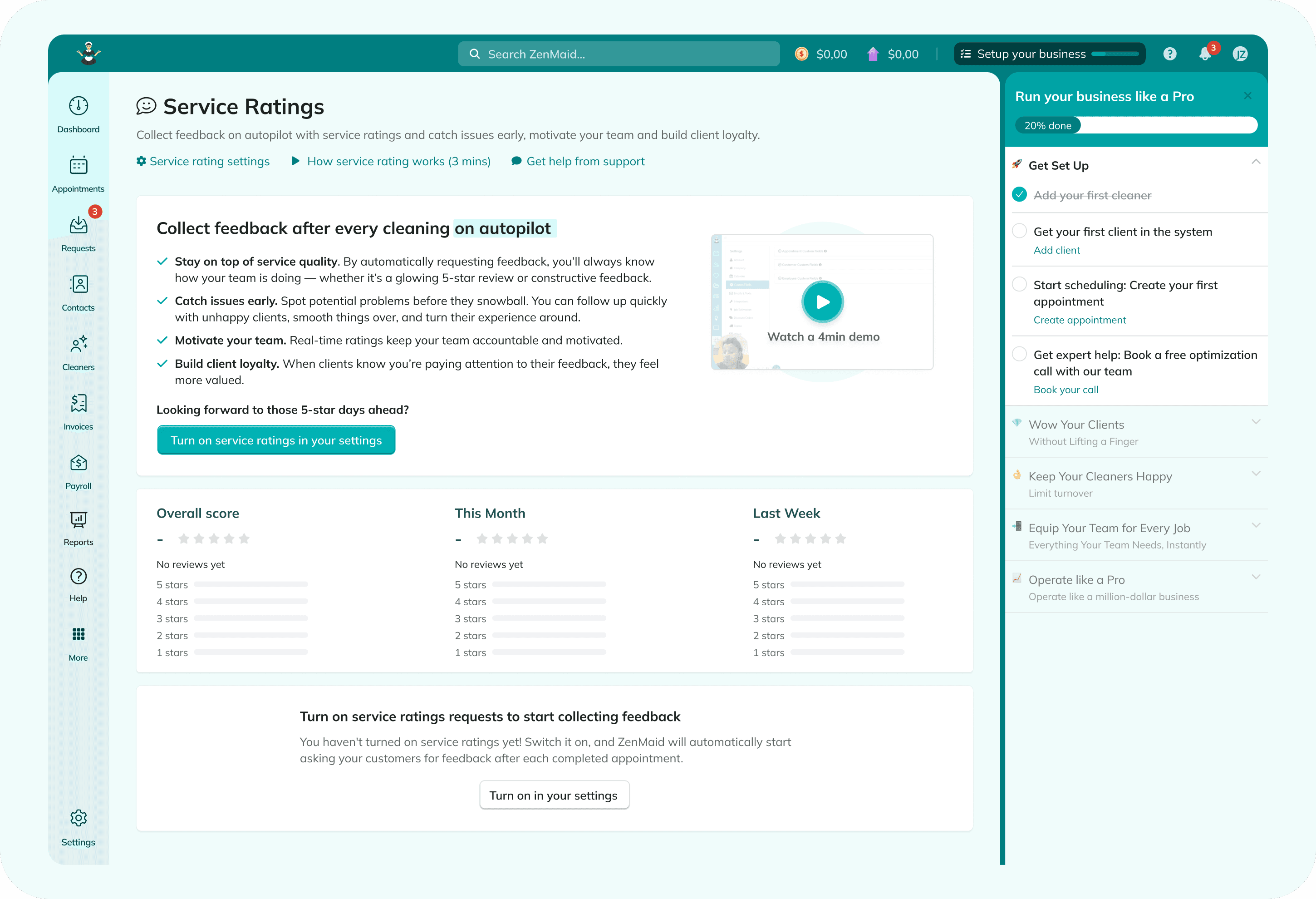
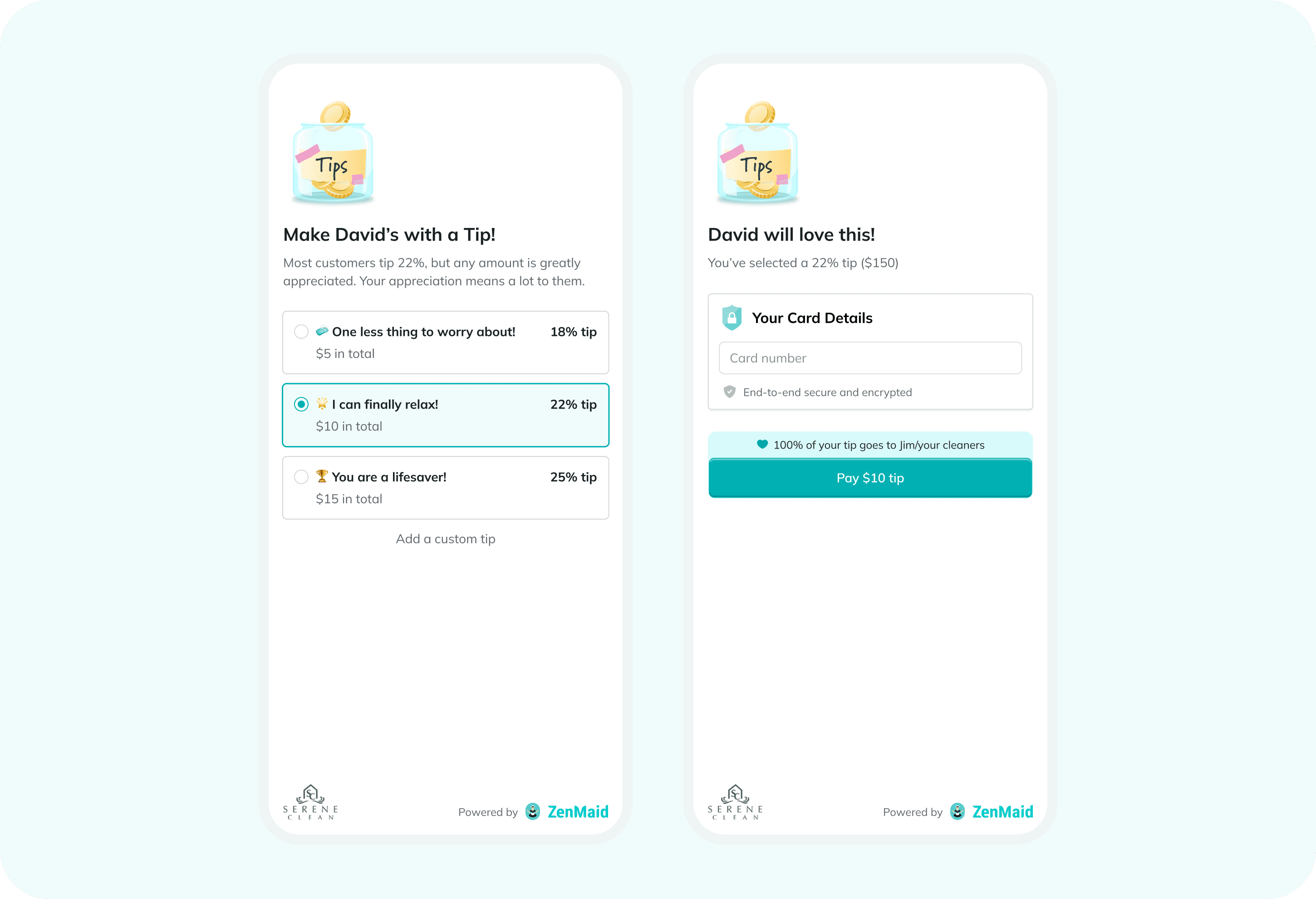
Helped ZenMaid grow from $1M to $5M ARR
Most SaaS founders assume a growth plateau means something is broken with the product or the marketing. Asia Orangio has spent eight years helping over a hundred SaaS companies figure out what is the actual reasons for stalls in growth.
Asia is the founder of DemandMaven, a growth consulting firm focused on bootstrapped SaaS companies. Her whole approach to growth is holistic, looking at team structure, retention, segmentation, and product together, not one layer at a time.
In this conversation we get into why growth stalls at predictable moments, why NRR is the metric that actually tells you what's going on, and how to figure out which customer segment is worth doubling down on.
🧠 What you'll learn in this episode:
0:00 - Why acquisition is the least efficient growth lever and what to focus on instead
1:41 - How Asia began work in holistic growth consulting and why the shift happened
6:24 - The three ARR milestones where SaaS growth most commonly stalls
7:22 - How Asia diagnoses a growth plateau using pirate metrics, team structure, and processes
8:39 - Why the founder is almost always the bottleneck at a million ARR
10:06 - Why NRR is the most important metric and what below 80% actually means for your growth
14:31 - What team structure looks like at a million ARR versus three to five million 16:17 - Why the founder being the bottleneck is a structural problem, not a personal one
21:59 - The time tracking company stuck at four million and why their flat org made it nearly impossible to grow
24:20 - The clinic management company with four senior marketers and no one actually leading marketing
35:57 - Why 12-month churn is scarier than monthly churn and why it should keep you up at night
39:23 - How to decide which customer segment to focus on when you have competing options
43:12 - The clinic management case study where one segment had three times the NRR of everyone else
47:45 - How Ben Chestnut built NRR cohort reports by hand at Mailchimp to find his best customers 53:00 - Why not everyone on your team is wired to seek out and use new information
1:02:37 - Why Asia is obsessed with Granola and how she uses it with Claude to query her meetings
1:05:02 - The Mangomint activation experience and what it teaches about building for your actual audience
💡 Actionable takeaways from Asia
Steal these quick wins:
1. Pull your NRR report right now and look at it by segment
If you have ProfitWell, you already have an NRR chart. Asia's suggestion is to go look at it today, not next quarter. The number you're looking for is 12-month net revenue retention by customer cohort. If it's below 80% for your primary segment, that's the thing to fix before anything else.
2. Run a cohort analysis to find your best customer, not your most common one
Ben Chestnut used to build NRR cohort reports by hand at Mailchimp, flipping through different customer attributes until he found which segments had the strongest retention. That process told him who to focus the whole company on. Asia recommends doing the same: look at which segments have the best NRR, whether the team actually likes working with those customers, and whether you have a compelling enough story to attract more of them.
3. Treat a growth plateau as a diagnostic problem, not an execution problem
When Asia comes into a new engagement, the first thing she does is look at baseline pirate metrics, team structure, and how the team operates. The instinct for most founders is to push harder on marketing or ship more features. What she usually finds instead is that either the founder is the bottleneck, the team isn't structured to own the work, or the company is building for the wrong segment. Knowing which of those is true changes everything about what you do next.
4. Don't restructure your roadmap until you know which segment actually stays
Asia's story about the clinic management company is worth sitting with. Ninety percent of their customers were solo practitioners, but when she ran the retention analysis, the segment with staff had three times the NRR. Before you decide who to build for, pull the retention numbers by segment. The answer is usually already there.
5. Look at your 12-month churn number, not just your monthly one
Asia is direct about this: your monthly churn number might look fine while your 12-month churn is quietly killing growth. The customers who leave at month eight, ten, and twelve are the ones who tried to make the product work and couldn't. That churn shows up in NRR and it compounds. She recommends making 12-month retention a standing metric you review regularly, not something you check when growth slows down.
Introduction
Jim: Hey, I'm Jim, and this is the Love at First Try podcast, a podcast for SaaS CEOs and developers that truly want to learn more about design and care about it, but there are no designers that find it too complex. In every episode, we discuss how to design products that become sticky and unforgettable. We dive into the topics of taste, UX, growth, and conversions, and we share practical tips and frameworks you can add into your development process. Enough with the intro, so let's dive into today's episode.
00:27 — Introductions and how Jim found Asia
Jim: So yeah, thanks a lot for joining the podcast officially as well and for making the time today. You've been one of the persons that I already wanted to get on the podcast as well. And I think that if I remember correctly, I discovered you initially through SaaStock. I think you gave a presentation there and I remember talking to you actually. Yeah, I remember like after the presentation that I came and talked to you. And that's actually, that was my first introduction to your world. And since then I started following you and so you're also engaging MicroConf I think right? With the community — yeah.
Asia: Mm-hmm. Yeah.
Jim: And yeah, we started working recently together with some coaching calls where we started helping us with growth on the product design part and I say you have a lot of cool things to share. Once we started working together as well, and I would love to go deeper into everything today. So the first question we always start these — an intro about you, who you are and what is your story and also who you're focused on helping at this moment and how as well since you're into providing services as well around growth.
01:41 — Asia's background and how DemandMaven was founded
Asia: Yeah, for sure. Hi, my name is Asia. I am the CEO and founder of Demand Maven. DemandMaven is a growth consulting firm and we primarily focus on SaaS companies and PLG companies. And our whole approach to growth is really looking at growth from a holistic and sustainable perspective. A lot of our clients are bootstrapped — sometimes they have funding, but if they've taken funding, it's usually not like big giant VC, it's usually like small amounts of VC or what we call indie funding. And we really primarily focus on helping these companies overcome growth plateaus and growth stalls.
I got into this work eight years ago now, so I've been running DemandMaven for about eight years. I got into this work because originally, before I was running Demand Maven, I worked for two VC-funded startups in Atlanta, both from a marketing perspective. So I was a head of marketing and I was also a head of demand gen. And when I initially started DemandMaven, I started with a focus of demand generation, hence the name. And I focused on primarily marketing and helping bootstrap founders figure out what is their early marketing strategy. But what I discovered was it kind of didn't matter if I doubled their leads. I could have tripled their leads — it didn't matter if they couldn't convert them and if they couldn't retain them.
03:01 — Why customer acquisition is the least efficient growth lever
Asia: It was pretty clear very early on that while marketing and customer acquisition is important, it is actually the least efficient growth lever, just across the board. I actually just did a podcast about this recently and the person I was talking to is a marketer and she was kind of taken aback. And I said, I don't think that's offensive at all. It's true, just from a mathematical perspective. But also it's okay to focus on other things besides marketing, of course. It is kind of funny because she was like, man, that's kind of hard to hear. I was like, actually, I think it's a blessing from a marketer's perspective. It's very validating.
03:49 — Asia's background continued: Moz, fractional CMO work
Asia: Since I've been working with Demand Maven and with other founders, I've helped over a hundred SaaS companies overcome slow growth. I have some incredible stories to tell in terms of the work that we've done. But also since running Demand Maven, I've sat on the board of Moz, which was the very first SEO platform out there, before it was successfully acquired in June 2021. And through that work, I know Brian Fishkin pretty well and a few others. More recently I've been fractional CMO twice. I'm actually in my second fractional CMO position. So I do, in addition to consulting, I also do fractional CMO work and fractional head of growth work as well.
04:43 — Growth plateaus and how they compound over time
Jim: I love how you describe the service — you help companies overcome growth stalls and growth plateaus instead of just helping them grow. Like you have a very clear problem you can solve. And it's a problem that I can really recognize because I've seen it with companies that we've worked with. Pretty much every company hits a plateau.
You have more experience than I do on this since I'm more focused on the product design part but the first — I feel like when they hit the first million it's kind of maybe the first plateau. I'm not sure if it's the first but it's like a common one that they hit. And that was the case with ZenMaid, but now the company grew to four or five million and growing. So I see like plateaus just happening every few millions now. And it's a very interesting one. And also with other teams that we are working with, we've seen the same — they grow to the first million, then for some reason it feels like you get stuck, that it's really hard to overcome and go to the next one. And you just have like fluctuation of, I don't know, like 10, 30K MRR added MRR in general. It's really hard to go to the second million.
So yeah, that's a topic that I would love to dive deeper into. How do you approach a growth plateau?
06:24 — The three ARR milestones where growth most commonly stalls
Asia: Yeah, for sure. I'll start by validating what you were saying earlier about how it seems like they get to the first million and then that's kind of like the first opportunity for a growth plateau. And then after that, it's every couple million. From what I've seen, there are three primary opportunities for a growth plateau. And the first is definitely at the first million. The next is the three to five million ARR range. And then after that, it's the ten million ARR range. And each one of those growth plateau milestones — if you can overcome them relatively pain-free, great. But if you find you're stuck at any one of those, usually the problems that cause them do look a little bit different.
So when I think about how to approach a growth plateau, the first thing that I'm asking is where are we at ARR-wise? Like are we at a million? Are we at four million and we're stuck? Are we at ten million and we're stuck?
07:22 — How Asia diagnoses a growth plateau: pirate metrics, team structure, and processes
Asia: Most of the clients that I work with are in that one to ten range and they're trying to figure out how to get to the next milestone. But the way I would approach it — I have the same process that I go through pretty much every single time, but I do look for slightly different things based on where it's at.
So if they're stuck at a million, I am pretty much always looking at top of the funnel performance, or what I would consider to be baseline performance. So if you're familiar with pirate metrics, for example, I'm looking at pirate metrics — acquisition, activation, retention, and then expansion revenue, monetization, all of those things — to get a sense for just baseline performance. And that's true for every company. But the unit economics do look a little bit different for a company at a million versus if they're at five versus if they're at ten.
The next thing I'm looking at is team structure — who's on the team and how are we actually structuring the team. And then the third thing I'm looking at is processes and how we operate. And the complexity of that looks different at different stages. So at a million, usually you don't have to have a super robust team.
08:39 — Why the founder is usually the bottleneck at a million ARR
Asia: If it's a solo founder or if it's a founder with like two or three people, usually one of the first things I say is there probably needs to be like one or two hires at a million. There might be like too many things we're holding onto that doesn't need to be on the founder's plate and can be on someone else's plate. The same thing is true too for goal setting — something as simple as how we set goals and how we think about reverse engineering into where we want to go and how we prioritize and make decisions.
I find at a million, there's a lot of time wasted on stuff that just doesn't move the needle. But it's usually because there might not be enough internal expertise on what actually matters. And then the other thing at a million too is sometimes it is just an obvious activation issue — duh, go focus on that. Sometimes it is pricing, that's the thing that needs to get dialed in. But in those scenarios, when it is obvious, usually the team is aware, usually the founder's aware.
09:37 — When teams know the problem but don't know how to execute
Asia: But they may not have the right process to actually execute well. So like, yes, we know activation needs help, but how do we do that well? How do we do that right? We've tried a million things and we haven't been able to figure it out. So usually what I'm coming in and doing is helping them run their very first activation project or run their very first pricing project.
When they're at three to five million and they're stuck there, this is where team becomes a lot more important because usually by that point they're actually able to afford a team.
10:06 — NRR as the most critical metric and what it tells you about growth
Asia: The team and the processes and the operations and how they all work together and how the team is structured — usually that becomes far more important. And what I find is a lot of CEOs and founders don't like hearing this, but what I find is usually what's causing the growth plateau is actually how they're structured and how they're thinking about go-to-market and also product. And in order to overcome that, there has to be a fundamental change in what we prioritize and how we prioritize it.
The most critical KPI to me — the most critical metric that I look at with any project — is NRR. So 12-month net revenue retention. That's the most critical KPI. If it's not above 80% at 12 months on average for your primary customer base, growth is going to be slow.
The only way to improve that — there are a couple of things you can do — but you have to look at growth holistically and you have to take into consideration how you're thinking about product management. I think a lot of teams don't like to think about it like that because they're like, we're great at product management, everything we push creates growth. But the reality is like a fraction of what is getting pushed creates growth. And what needs to happen is we need to understand which customer segments have better retention over the long term.
And also we have to understand: does our pricing model support growth? And if those things are true, then that means we now need to refocus go-to-market on customers that are actually great customers and also make sure that we're pushing features to retain them. If you want to see growth, it has to be holistic. It can't just be one thing. But it's much easier said than done.
12:07 — Jim's experience aligning the whole company around retention at ZenMaid
Jim: Yeah, true. But I fully hear you on this. It's like even if you think about a service business — we help SaaS companies — it's the same thing with us. Even if you have an agency, no matter if you close like ten clients per year, if everybody turns within, I don't know, like one month, it's way, way different if you could retain them for like twelve months. So on this, I fully agree on the holistic approach.
That's something that we've been experiencing at ZenMaid as well. We focused on retention the last quarter. So there are two things there. The one is that there was full focus on retention instead of acquisition, and we saw growth because we saw that within the first three months, we lost almost 50% of people churning. And the other part was the structure that you mentioned — suddenly it became a company initiative and the whole company was focused on that. So we had improvements on customer success, on marketing, on the emails, the product experience where we focused on getting users to the aha moment, on the sales. So there were many improvements across the whole company in order to make it happen. And suddenly we saw like we started moving the needle actually.
Growth is a collaborative effort. Like people interact with the support, with the sales, with our marketing, with the product, and we have to align all these teams to provide a holistic, great experience for somebody to stay inside the product.
14:31 — Team structure patterns at a million ARR
Asia: Great question. I can tell you the patterns and also some of the pitfalls. So first, patterns. It's really common at a million for, traditionally speaking — and I would say most commonly — the founder tends to be technical, although they don't have to be. I certainly work with companies where the founder isn't always technical. Sometimes there's a co-founder pair and one of the co-founders is technical, or the founder is non-technical but there is some head of engineering type person on deck.
But all that to say, traditionally speaking, we see the founder is technical and a lot of the times they might still be committing to their code base and writing code themselves. They might have one or two other engineers with them. But the founder is also usually responsible for product. From there, outside of that, it kind of ranges. Sometimes we see very small marketing teams. But usually the marketing team is not very advanced — it's usually a more junior marketing team. It's very rare for me to work with a company that has a very experienced marketing team.
Sometimes there's a support team or a success team of some kind. Otherwise, sometimes the founder's doing a lot of that themselves, but usually there's some type of contractor or someone who's doing support of some kind. And that's about it. Sometimes there are agencies or freelancers executing really specific marketing tasks. But for the most part, it's a very lean team, and nine times out of ten, my number one recommendation is: what can we outsource and hire?
Usually the founder is doing too much. And part of why growth is slow is because if you think about growth as setting a strategy and then executing it, usually the bottleneck is the founder. And so the number one mission is to figure out: who are we hiring and how are we hiring that person?
17:15 — What hiring looks like at a million ARR
Asia: If you're at a million, you can usually afford to hire. You might not be able to bring on a super senior marketing product growth team, but you should be able to bring on a few freelancers, contractors, consultants where you most need them. So whenever I work with a company in this kind of phase, my mission is to figure out: with the budget that we have or with our current financial profile right now, here's what it looks like to hire in this scenario, and here's what it looks like to hire in this scenario.
18:12 — When a bigger team still isn't translating into growth
Asia: Sometimes I will come across companies that are at a million but they're stuck, and they have maybe a more robust team — maybe there's more marketing involved, like three to four folks in the marketing team, or maybe there's a solid product team. And usually looking at growth from here, it really becomes a story about how they're all working together. What are they prioritizing and why are they prioritizing it? And also: are these teams aligned and sharing a common goal? Or is it kind of like marketing's over here doing this and product's over here doing this and sales is over here doing this?
And when we move up in ARR — at three to five million — you could actually have the same story where there tends to be a more robust product and engineering team, same thing for marketing. The largest headcount that I've seen in the three to five million range was like maybe twenty full-time employees. It could be as large as that, but it could also be smaller. But team becomes extremely critical — it's especially critical at the three to five million mark because usually that says: if these are the people on deck and we're stuck here, then there's something about the work that we're prioritizing that's not registering or translating into growth. And part of my job is to figure out what has broken.
18:57 — Case study: time tracking company stuck at four million ARR
Asia: There's one company in the time tracking space. They're stuck at four million. Growth is inching — we're talking like a percentage of growth a month, month over month, which is very, very slow. It's still technically positive, they're not contracting, which is great. But it's not ideal.
It's basically a pair of co-founders and they have like twenty to thirty contractors. They're all direct reports, but none of them are full-time employees. So they basically only have like three or four full-time employees in the whole entire company — I could be wrong about this, it might be closer to ten. But the entire org is completely flat. There's no middle management, there are no other executives or leaders. It's the two co-founders and then like twenty to forty direct reports. This includes agencies, contractors, everybody.
At first glance, you're like, oh man, I bet that's a really profitable company. And to some degree, yes — they don't have the overhead of a full-time team. But the trade off is those founders are so busy. They are the bottleneck for every decision. And also they don't have the time or the energy to actually make any real investment into any one particular area because they are strapped so thin.
And also because there's no internal leadership, they're not just the co-founders. They're also chief product officer, chief marketing officer, chief operational officer, chief financial officer. They're the chiefs for everything. So they have to make decisions across every department despite not everything being their superpower. This makes it extremely difficult to scale. It's going to be really, really hard for them to overcome their growth plateau until they restructure.
22:02 — Why restructuring is hard once control becomes habit
Asia: Part of the challenge is: if you're used to having control over everything for a very long time, even if you don't actually like doing it, it can be hard to figure out how to bring on new leadership. And they've tried many times to hire a head of marketing and it's fallen apart for various reasons. For them, growth is going to be really difficult until they can restructure and rethink how each department is getting managed. Because right now, there aren't any real full-time employees. It's not really owned by anybody.
And also their relationship with their contractors is like — they kind of tell everybody else what to do rather than the reverse. Which is a really, really difficult position to be in. This is an example of a structure that internally is going to make it basically impossible for them to grow and scale. It's literally not scalable because the founders can't infinitely scale because of their time and also their expertise.
24:20 — Case study: clinic management company with four senior marketers and no head of marketing
Asia: On the flip side — there's a company that I worked with in the clinic management space. This was actually very rare. They have a very experienced marketing team — three or four senior marketing leaders on their marketing team — but the structure is completely flat. So there's no head of marketing. Four incredibly senior, very experienced marketers, and they all report to the CEO. Which is great, except the CEO does not have marketing experience.
If there is no head of marketing, that means that the CEO is the head of marketing. And so the CEO kind of has to make decisions about how to think about, structure, run, and lead marketing. But if that's not the CEO's zone of genius, what ends up happening is the CEO kind of goes to the marketing team and is like, what do you guys think we should do? And they're like, I don't know, what do you think we should do? Because no one's really in charge.
Despite having four senior marketing managers, because no one person really heads up marketing, no one person takes full responsibility for it. And so I'm actually really pushing for the team to restructure so there's a clear head of marketing.
And also the way that they set goals — because marketing is being led by the CEO where marketing is not that person's zone of genius — the CEO approaches goal-setting very differently. So instead of saying: here's the target at the end of the year that we need to hit, let's reverse engineer into trials and reverse engineer into what targets we've got to hit across our channels — instead it's more like: what do we think we can do this quarter? And all the senior marketing managers are like, I don't know, what do you think we could do this quarter?
They don't really know where they're headed for the year. And because of that, they're trying to optimize for quick wins within the quarter and not building momentum for the whole year, because there's no one singular goal. Communication breaks down, alignment breaks down, and then goal setting and process breaks down.
25:45 — What a functional marketing leadership structure looks like instead
Asia: The CEO and the head of marketing working really closely together on figuring out: here's what we're working towards for the whole year. Now let's set quarterly milestones and now let's track progress towards those milestones. Which is a very different way of thinking. But again, that's really hard to do if you've got a super flat marketing team, especially if they're all senior and even more so if they're all reporting to you, then you're the CMO now.
26:21 — Jim on going below the surface vs. fixing the obvious
Jim: Yeah, that's an interesting one. It almost reminds me — it's not the best analogy — but it reminds me a bit of the business coaching that I've been going through personally as well. When you think that the problem is, let's say, a marketing tactic you're using, but there's something deeper actually. That's why I make the analogy of business coaching — yeah, what you think maybe is, our LinkedIn strategy is not great and that's why you're not getting clients. No, maybe your offering is problematic. Or maybe you have confidence issues or leadership issues.
That's where it gets really interesting — to actually go below the surface and look at the core. And I totally hear you on the founders becoming the bottleneck and also on the lack of clear ownership per area. It's not just because they cannot scale, but because they're not great at everything. And there are people that can come up with better ideas. So you're limited not only by their time, but also by their creativity and expertise.
27:50 — On product team structure: no PMs, no designers, and how that plays out
Asia: Yeah. There's usually no product manager. There's also usually no product marketing manager either, which is a key hire that kind of sits between product and marketing. And this is, in my opinion, just as crucial of a role once you get into the three to five million range.
What I find is there's usually no product manager, there's no product designer or UX designer. And this creates a lot of tension because basically the founder CEO is acting as head of product and also head of design and is responsible for translating product requirements and user stories to all of these folks. And for lack of time — because you're founder CEO doing everything all the time — it's usually not as thorough as it might need to be.
And also what ends up happening is you end up shipping a lot of features that customers, maybe not complain about, but they have a lot of feedback about — because they're like, it doesn't do this, it doesn't do this, it doesn't do this. And usually we find there's no user research, there's no product discovery. Usually everything is compiled in — I've seen markdown files as being the product roadmap. It's just like bullet point lists of features. I've seen databases stacked with Notion ideas. I've seen Jira boards with tons of cards for feature requests and ideas, but maybe nothing moves or nothing really gets validated.
Don't get me wrong, this is a really fast and scrappy way to operate. But what ends up happening is two things. The first is: while you might have the right idea, like it might be the right thing to do from a product and feature perspective, you might end up shipping something that's very underbaked and doesn't provide the value that the customer is expecting at the end of the day.
31:44 — Why features don't get adopted and what's actually causing it
Asia: I hear a lot of complaints about product adoption being very low and customers not using the thing that they built. Part of that is awareness, but the other part of that is the customers don't find it actually helpful. It wasn't what they needed it to be. So that's the first potential pitfall. The second is that you prioritize something that is actually not going to create great retention or adoption in lieu of something else that probably could or would, if and only if we had done better product discovery or UX research.
And what I find is the thing that needs to change at both of these stages — if you're stuck at a million and NRR is not great — product is the first thing we go to. Because 12-month NRR has to be above 80% for you to experience growth. If it's like 70%, you're going to be flat. And if it's less than that — if it's like 60% or 50% — you might actually be declining in growth. And you're basically putting a ton of pressure on marketing to generate a lot of customers and trialists for you to basically just break even.
So we have to understand why we're stuck. If it's poor NRR at 12 months, we look at product. And we look at how we're executing product. If you are a SaaS PLG company, 90% of your growth is going to come from how you think about product. Everything else is additive. Like, it's cherry on top. It's icing on cake. It's not the actual cake. Product is the cake. And if you don't bake it well or put the right ingredients into it, no one's going to eat your cake and no one's going to want it.
33:42 — What changes at the process level when product isn't working
Asia: At a million, sometimes it is as simple as just the founder needs to add one or two steps to their process. And those one or two steps usually have to do with product discovery and forcing us to prioritize. The second would be really deeply understanding the quantitative side of product — because I find a lot of founders don't spend nearly enough time understanding what was the product adoption of that feature and how did that impact bottom line revenue.
We essentially need to really deeply understand: what are the features that are money-making for us and also what do customers actually want in order for us to keep them? And it's really hard to do that if you don't understand what creates value for customers. That's where product discovery comes into play. And then UX just prevents you from designing things that people don't want to use — helping you prevent crappy screens. That's really the biggest thing.
When you're three to five million and stuck and NRR is not great, we're looking at product, we're also looking at pricing. Because sometimes it's pricing that really needs realignment and readjustment. Your customer base is more evolved now and they need a different pricing model. But if it is product and if we're churning customers that we really shouldn't be — especially in that long-term net revenue retention — usually what I find is it's all about team structure and hiring. So ideally we bring on our first head of product management, our first PM. Ideally we have someone on a regular basis doing product design. And also ideally we have a process that really supports growth.
35:57 — Why 12-month churn is scarier than monthly churn
Asia: At the end of the day, the main value mechanism is going to be product. That's why customers pay. They're paying for product. It's literally software as a service. So if we aren't continuously improving product, we are going to see really frustrating long-term churn. It won't show up in the first month or two. It shows up at month eight and month ten and month twelve.
That's the churn that should keep you up at night. Your monthly churn number — 3%, whatever, great. But to me, the churn that should keep you up at night is the 12-month churn. That's what's actually scary to me. And if we don't have that dialed in, it's just going to be really, really hard to grow.
36:30 — Jim on balancing distribution with delivering on the promise
Jim: Yeah, I see your point. Yeah, it's about balancing the distribution — finding a way to get in front of more people with a message that resonates. But after that it's really about making sure you deliver on the promise and what they need.
The other thing that I really like that you mentioned — I've seen also in your content — is the importance of segmentation. That's something that we went through at ZenMaid and the other team we've been working with on the activation part. Even if the SaaS is very niche, still there are cohorts over there. Usually they're about the size of the company or other parameters or other variables. And then you need to look into the retention, what do they need, what are the ones that are more worth investing into — because the reasons that they churn are very different.
For example, at ZenMaid, you see bigger teams churning because we don't support QuickBooks integration versus smaller cleaners that complain about the app. But the bigger teams don't care because they're not going to manage a team of 30 cleaners through a mobile app — they need a desktop device. So you can really see how the needs can be very different.
39:23 — How to decide which segment to focus on
Asia: It's a very common conundrum. For me, it kind of comes down to a handful of things. The first is: which cohort has incredibly supportive NRR? Do we like them? And from a bootstrap founder's perspective, I do think this is important — because technically any product can pivot to serve anybody at any moment. But if the founder and the team doesn't care about that type of user, they're not going to stick with them very long. So it's important for that team to feel connected to who that buyer is.
And then I think the third is: do we have a winning position with that particular segment? We could go after a particular segment that we're really passionate about, they're profitable, they have great NRR. But do we have a compelling enough story to actually attract them? And sometimes we have ideas for segments we can go after, but our positioning in the market and our go-to-market strategy might be challenging for that — maybe we're competing against ten different tools that we've never really competed with before.
So I look at just the pure financials. I look at the vibes of the team — do you like those people? Because it doesn't make sense to attract a whole customer base of people that you're like, I've got to handle the support request for this person. And then third: do you have a compelling go-to-market positioning for this? If you don't, that's something you have to build towards. And you're going to have to decide if that's worth it, or if you should focus on a different audience that maybe is closer to where you're at today.
43:12 — Case study: clinic management platform and the segment with 3x NRR
Asia: So for example, I worked with a company in the clinic management space. It's funny — 90% of their customers are a particular profile, solo practitioners. And we actually did a qualitative research project where we talked to some solo folks, but we also talked to people who were multi-practitioners — not just them in their business, they also had staff. And we evaluated both.
And what we found was the people who had staff in a more committed, serious capacity — their NRR was literally like three times the amount as the solo practitioners. Not only that, but they were also the better customers, even though they didn't have as strong product market fit because there are features that the product would need to build to better keep those folks. But the multi-practitioners that the product was able to keep — the LTV is crazy high, the ARPU is high, everything about them is better.
And also the team likes them. They're like: we like these folks, but we've just never really aligned all the ships to focus on them. Marketing, product, customer success, support — everyone was focused on the solo practitioners, and the roadmap reflected that.
After pulling all the data, I had a call with the CEO before meeting with the rest of the team. And I said: I'm going to push you guys to focus on this. Hopefully I don't have to pull your arm too much. And actually the CEO was like, nope, you don't have to pull my arm. I think this is great. We totally should. And I've always wanted to, and I just kind of needed someone to tell me that we should go after this. Because the product market fit gap isn't big.
44:34 — How long it actually takes to close a product market fit gap
Asia: It's something that we could close within six or twelve months. And if you think about that runway-wise, that's the amount of time that you would need to do the change management work to redirect and realign anyway. I wouldn't say it's a big pivot, just a realign.
I think though, sometimes the commitment and the time horizon is what scares people. Because you're not going to close product market fit gaps overnight. It's going to take time. But usually you're only ever six to twelve months away from better product market fit. Usually.
45:18 — Jim on segmentation as an art: the ZenMaid example
Jim: Yeah, you actually have to go deep into every segment and do a proper analysis and take a lot of things into consideration. What I've seen from my experience is that segmentation is an art itself. And what I mean by that is you could say — from my side, the example was cleaning business owners between five and eight cleaners — let's say that's the ICP. But then maybe that's not enough. You need to go deeper.
Like, are they actually using Google Calendar and haven't switched to a competitor? Because maybe if they're using one of our competitors, the chance they're going to switch back to us is not high because we're missing a lot of features. But if they're on Google Calendar, we could be a great alternative.
The segmentation — one of the things that may be obvious for you, but was a big learning for us the last few years — is that you don't have to use only one variable, it can be many. You really need to look at data and at the customer base and try to understand where they're coming from. What tool are they using, what is the size of the company, if it's a horizontal SaaS, what is the industry and the use case. But what happened in their life and where they're coming from has been one of the most important variables that I always look at because many times it tells us what they're going to need. And actually it was the piece of data that I've been using a lot when it comes to designing the onboarding flow.
47:06 — Asia on the Ben Chestnut / Mailchimp NRR story
Asia: It reminds me of a story actually. So Ben Chestnut was one of the co-founders and also CEO of Mailchimp for forever before it was acquired — Intuit acquired them. I remember I gave a talk at MicroConf and I was talking about NRR and how everyone has an NRR report. If you have ProfitWell, you have an NRR chart and you should pause the podcast and go look at it right now, because that's how critical this KPI is.
After my talk, Ben Chestnut came on stage and was like: man, so back in the day, I used to build NRR cohort reports by hand. Even after tools eventually got built to do this easier, he would actually build his NRR cohort retention reports by hand. He said he would just flip through different variables and attributes to figure out which segments had the best possible NRR. Calculating it all by hand in spreadsheets, super messy and crazy. But he said he never would have figured out where to focus and take the business.
Should he focus on creators? Should he focus on consultants? Should he focus on designers? Like, who's the best possible customer for Mailchimp? And going through that process, it does require a curious mind. And I think it also requires a mind that can kind of see outside of yourself a little bit — drop every assumption you've ever made about Mailchimp. Who's the actual best possible customer based on the data that we have? And he said he built like twenty of those reports and he landed on like two to three, and that basically was what gave him the confidence to move forward.
49:10 — How Ben Chestnut landed on creators as Mailchimp's primary segment
Asia: It ended up being a creator type. And then also there was another segment that he ended up focusing on — like marketers to a degree — but creators ended up being the primary focus. But he had to get really specific on: what type of creator and what type of business owner. And that was how he did it.
He was like: now there are tools. You could use ProfitWell. But now you can export your data and give a file to Claude and Claude can calculate it for you now. Like it's so easy to do. There's almost no excuse except for of course the time. But once we produce those cohort reports for the client, that was kind of what convinced them. They always kind of had the hunch, but I think seeing it on paper — and seeing it like, it's literally 110% at 12 months, man. But it's like 10% of our revenue. We should focus on them.
50:09 — Jim on using data to validate a gut feeling
Jim: Yeah, you get data and a sophisticated analysis that makes you feel safe — okay, my gut feeling here and the signals that I've been looking at are actually true, and here are the numbers.
Yeah, it's very interesting because for our episode, initially I was thinking to dive into activation and how you define the hammer and this specific stuff. But it's really cool how we actually zoomed out and looked at the very high level stuff and how this can have a big, big impact. Because in the end, every company is unique and what you need to do for your own onboarding flow and so on, you need to figure it out based on your audience and what they need.
And it's very interesting — when you make it a company initiative and not just a product initiative, it can really make a difference when you align everybody. For example, to focus on activation.
53:00 — Learning systems, knowledge rituals, and how information actually gets used
Jim: I'm curious about what I call learning systems. Especially now with AI, we can do so much data analysis and generate knowledge. And for me, one thing that is interesting and a topic that I'm always investigating is: how can you create rituals and habits around generating knowledge and consuming new knowledge? My core principle is that the better info you feed to your team, the better output your team's going to generate.
I've been thinking about what are some rituals and systems we could put in place to actually make the team smarter. It sounds nice and simple in theory, but I've seen it being very challenging to create that recurring aspect of it. What is your experience with this topic?
Asia: You know, it's interesting. I have an answer, but it's not a sexy one.
Jim: Yeah, well, go for it.
Asia: I think that there are — and this is dramatically aggressively generalizing — but I think there are two types of people. I think there are people who are naturally curious minds and data seekers. And then I think there are people who are the opposite. Like that's just not how their brain is wired. They are very much focused on execution or implementation, whatever it is that their job is.
And it's funny — you said, if you give people information, they'll use it. I actually disagree. People don't use information. It's actually kind of extremely frustrating how little people use insight and information.
I think the way that we resolve this — there are two things. You can either build a culture and build a team of insights gathering, insights sharing, and insights actioning. You don't just receive information, but you actually figure out how to implement and action on it. You can build a team of that, and that's something that you can hire for — you can identify those traits in your hiring process.
I think the second thing is: if you know that that's not everybody on your team, but you do have some people who are naturally curious and constantly going through information trying to figure out how to use it — because let's be honest, most people on most teams are extremely busy and another piece of information is just not going to enter into their brain — I think it has to be at the leadership level.
55:00 — Asia's role as fractional CMO: being the information distributor
Asia: Part of my job as fractional CMO is to be the receptacle of information. And then I pick and choose and translate the information that I really want to make sure gets implemented on my team. I have a senior marketing manager, I have a head of partnerships and I have a head of community. There are three agencies that we work with in different areas. And part of my job is to be the information distributor.
And on the back end, we're using a lot of AI to create what's kind of like an analytics bot for someone who's not super charts or reports savvy. In natural language — it's called Otis. You can ask Otis: hey, what was the new user retention rate for users who did this in the last 60 days and took these actions? And Otis will be like, let me calculate that. And it'll tell you. Which is great for a more junior marketing team who doesn't have super deep SaaS experience, who doesn't know how to build new user retention reports.
So that's literally my job as fractional CMO: absorb knowledge and then make sure I'm sharing the right pieces.
56:39 — On the unnamed VP at HubSpot and AI adoption patterns
Asia: There's a really, really good article by — gosh, I'm going to totally forget his name. He's like a VP at HubSpot. It's not Kyle, it's — man, I'm going to totally forget his name. He has a great newsletter and he talks a lot about AI and how he's using it.
Asia: He's one of my faves to follow when it comes to leveraging AI at scale because he's using it at HubSpot and he talks about his experiences using AI for his marketing team and growth team. One of the things he says that I completely agree with is: not everyone is going to be a data seeker. And therefore not everyone is going to use AI the way super AI early adopters do. There will always be late adopters and laggards.
So the way he talks about it is: identify your power users, and from there you can build all kinds of wonderful things. But the people who aren't the power users — whose job is it to filter information and give it to the right people, and then not just give it to them, but for the stuff that really, really matters, actually oversee implementation? Because it's not enough to just give people stuff.
58:30 — Why information alone doesn't create change without leadership behind it
Asia: I can't tell you how many times my team gets tagged in something in Slack — there are always reactions and thumbs ups — but when it comes to: did that person implement anything because of it? Nine times out of ten, not unless I say something about it. Like, Katie, let's make sure we get this into this thing. There's just so much happening, especially for a remote team. There's so much happening in Slack it's impossible for any one person to keep up with it all.
If you really want to see it executed and implemented, I think it has to be either a culture that you build or at the management level. Someone still has to — not in a micromanage way, but in more of a leadership way — say: I really would like to see this implemented in this way. When can that get done? More like that.
59:36 — Jim on AI as a knowledge amplifier, not a replacement for thinking
Jim: Yeah, yeah, a hundred percent. That's a very good separation. I like the different layers within the team and who finds value in the data. Because no matter if you just create an AI agent that sends every Monday the top support — it doesn't mean people are going to act on it.
And I like how you separate the different types of people — the people that love to consume that new stuff, and the others that are just focused on execution. You cannot expect everybody to be the same.
What's getting interesting to me now — for the devs now with AI — pretty much everybody's using Claude, including us. Now as a design team, we've started shipping code as well. We're handing over pull requests on GitHub. It's not that we're moving away from Figma, but we're adding coding in the mix to get more practical and closer to the real thing instead of just creating concepts.
And what is very interesting is to create a setup in Claude where you can tap on knowledge — so whoever is prototyping can easily access existing knowledge. Could be support issues, reviews, or any intelligence and insights around customers. And then you can have Claude to not be the customer representative, but to bring all these insights to you and challenge some assumptions. Not to go and ask: hey, what should I build? This doesn't work. That's not the way to use AI.
1:01:50 — Jim's closing question: what's your favorite SaaS right now?
Jim: Cool, I see we have three minutes left. I have one quick question: what is your favorite SaaS at the moment and why?
1:02:13 — Asia on Granola
Asia: Ooh, my favorite SaaS at the moment. I am obsessed with Granola right now.
Jim: Okay, second person that says Granola — interesting — and why?
Asia: Okay. I really, really like the fact that the way it takes notes is it records device audio rather than being a bot that has to get invited into a call or whatever. What I also love is that you can connect Granola into Claude.
I work from home and my team is distributed on both the DemandMaven side and in my fractional CMO role. I am on my computer all the time, in a meeting all day, every day pretty much. And what I love is I use Granola to take all of my notes for the entire day. And my absolute favorite thing right now is I can go to Claude and be like: Claude, take all of my calls with Christian and compile all of my notes from the class and compile all of the words that we translated for the day. And then I want you to take that and turn those into notecards.
It's a personal thing, but for whatever reason it just gives me so much joy. I use it for work all the time — I'm like, Claude, tell me all the things that me and my CEO talked about in my fractional CMO work. And then it does it, spits it out. Like, yep, here's all the things.
Meetings, in my opinion, are my most valuable resource from a consultant's perspective. So the things that we talk about, the stuff that I educate on, the stuff that I teach, the stuff that I coach — all of those things are so valuable and I don't remember them at all, to be honest. So knowing that there's a repository there and I can query it at any moment — and it's going to give me decent enough answers that I can execute on — it makes my brain feel at peace. Obviously I have to do my own thinking for the important stuff, but knowing that it's there and it can be queried just gives me so much peace of mind.
1:05:02 — Asia on Mangomint's activation experience
Asia: Apart from that though, I'm going to give a non-AI answer. There is a platform called Mangomint and in my fractional CMO work, we are in the process now of redesigning and rethinking our activation experience. Mangomint has the best onboarding and activation experience I've ever seen within the context of their own industry. So if you go to Mangomint and you sign up and go through the whole process, there are going to be some things that make sense to copy. Most of it though is very highly contextualized to the industry.
Mangomint targets nail salons and stylists and hair salons. That industry is traditionally a very low tech industry in that they're non-sophisticated buyers. They're usually very, very impatient with anything too complicated. There are a million tools that they could use, so they have a lot of choice. They get overwhelmed very easily.
Mangomint recently — there's a study on them that Kyle Poyar did, I think on the Growth Unhinged newsletter — and they talked about how Mangomint got to 25 million. And one of the biggest bets for them was going all in on PLG and specifically having probably one of the most well thought out activation experiences I've ever seen.
So when you sign up, they don't even ask for your info until like the fourth screen. It's a very easy sign up flow. It's an account validation through text. And then from there, they put you into like a playground — basically a sandbox of the business type that you selected. So if you select that you're a nail salon or a hair salon, they give you a playground of that business type with sample data populated. And they're basically saying: you're probably too busy to put in your data to see how this thing works, so let us just give you an example of what it would look like. And when you're ready to exit and go build your own account for real, you can do that.
There are some things that I would simplify, but for the most part I can tell that they know their audience and they have exceptional activation. It was one of their big bets to get to 25 million. And I can see the love and the effort that the design team, the product team, and marketing put into it. You can just tell this wasn't just a CEO woke up and was like, this is the idea. This was a full team effort and you can tell there's a lot of love put into it.
1:08:02 — Jim on the demo environment UX pattern
Jim: Yeah, I've actually gone deep into it because it's also scheduling software for hair salons and so on. And they have the demo environment UX pattern that I've been curious to test. But the pushback that I get most of the times is: yeah, it's too complex, we don't have enough content, we don't want to try it out.
But there's something into it — you can just have a demo, you don't need to do any data entry, and then you can test everything in there with no risk of notifying your customers by accident and so on. Yeah, I should take another look this month probably to get some inspiration. I've tried it in the last six months and I totally agree with you and everything that you said.
1:08:30 — Asia on Owner.com as another example of strong activation
Asia: Owner.com is similar. They're a management platform for restaurants, but they also have a really nice sign up experience. It's slick. You're like, damn, this is really cool. But yeah, anyway, I'm really a fan of super slick activation experiences right now. So anytime I find one, I'm like, ooh.
1:08:58 — Closing
Jim: Yeah, makes sense. Yeah, I totally hear you. Cool. Thanks a lot for the answer. I think that's all from me for this episode. Maybe we could do another one in a few months to go into more tactical stuff — like activation patterns, we could look into onboarding flows that you love and why you love them. I feel it would be really fun to actually start getting more specific about the product experiences and so on. But yeah, for today, I love that we just covered all the high level stuff and the very strategic part. So thanks a lot for your time.
Asia: Of course.