All episodes
Bob Baxley
Ex-Design Manager Apple
Taste, quality and what it actually takes to build software people love
Teams our guests have shipped with






5 free onboarding UX fixes you can ship next week to convert more trials



Order your free video audit
12+ years of experience (ex-Zapier)
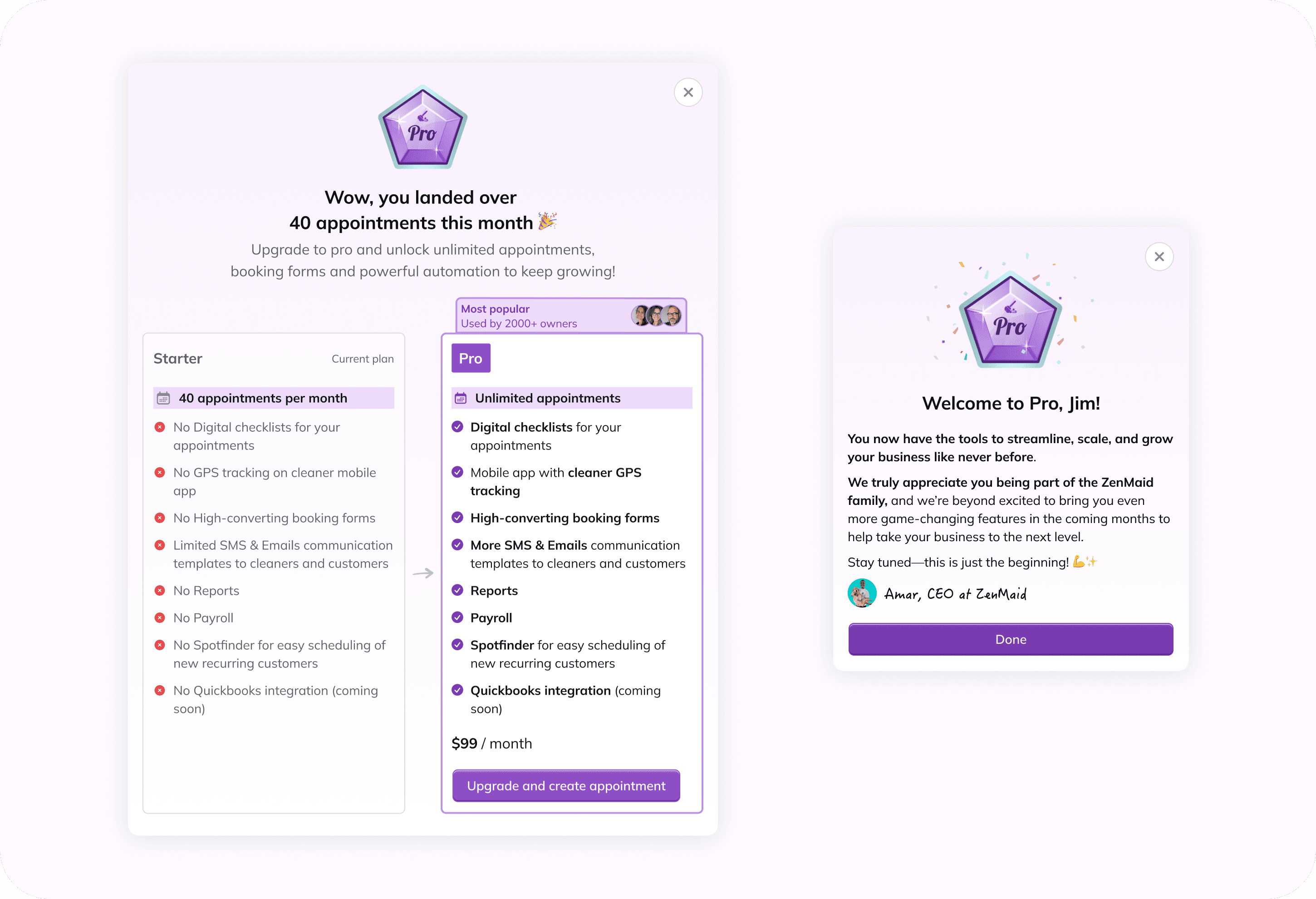
Helped ZenMaid grow from $1M to $5M ARR
A lot of SaaS products ship fast and skip the thinking. This episode is about what happens when you don't, and why that actually matters for growth.
Bob Baxley spent 35 years designing software at Apple, Yahoo, Pinterest, and ThoughtSpot. Products he worked on have been used by hundreds of millions of people. He's one of those people who has spent a long time thinking carefully about what makes software genuinely good, not just functional, and why so few companies get there.
In this conversation, we get into how to build a culture where quality is the standard, how to get your whole company to care about design without a single presentation, and how the decisions you make at the conceptual level shape everything downstream.
🧠 What you'll learn in this episode:
0:00 - Why the tech industry is in a speed race and what that means for product quality
7:37 - How Bob fell in love with computing at 11 years old and why that shaped everything after
12:31 - Why timing matters as much as talent when it comes to what you can build
13:58 - How economic pressure from VCs is changing the pace of design work inside companies
24:36 - The real difference between sales-led and product-led companies, and why it never changes after founding
27:05 - Why design teams have hurt themselves by hiding their process from the rest of the company
30:00 - How Bob's team ran an internal influence campaign at ThoughtSpot using weekly Loom videos
35:49 - What a head of design actually does on a sales call and why it worked
37:42 - Design tenets vs. design principles, and which one actually helps teams make decisions
42:30 - What choreography over control looks like in practice for a design leader
47:51 - The difference between micromanagement and being in the details, and why it matters
54:55 - How to think about quality within constraints instead of chasing world class as a target
1:00:46 - Why taste is hard to compete on, and which layer of the market you actually need to nail first
1:01:15 - A simple exercise to raise the taste level of your engineering team
1:06:08 - The three stages every market goes through before design becomes a competitive advantage
1:12:36 - What it really means to design for the person on the other side of the glass
1:16:57 - Why user research needs to be a ritual, not a one-time sprint
1:20:44 - The Post-it note observation that turned into a multi-billion dollar company
1:24:29 - Bob's favorite apps and what they got right at the conceptual model level
💡 Actionable takeaways from Bob Steal these quick wins:
1. Run the "three favorite apps" exercise with your team
Ask everyone to name their three favorite apps .Not the ones they use most, their actual favorites. Getting your team to sit with that question starts a real conversation about what quality actually means versus what just has good distribution.
2. Show the work before it's done
Bob's team at ThoughtSpot made a 22-minute Loom video every week for 35 weeks, showing projects at every stage and sent it to the whole company. It shifted how every department understood and valued design work, without a single big presentation or formal pitch. If your team feels invisible inside the company, this is a low-cost way to change that.
3. Replace your design principles with tenets
Principles like "be clear" or "feel responsive" don't help anyone make a decision because nobody argues the opposite. A tenet is a hard-edged statement your team agrees on once so they stop returning to the same debate.
4. Go watch your users outside the context of your product
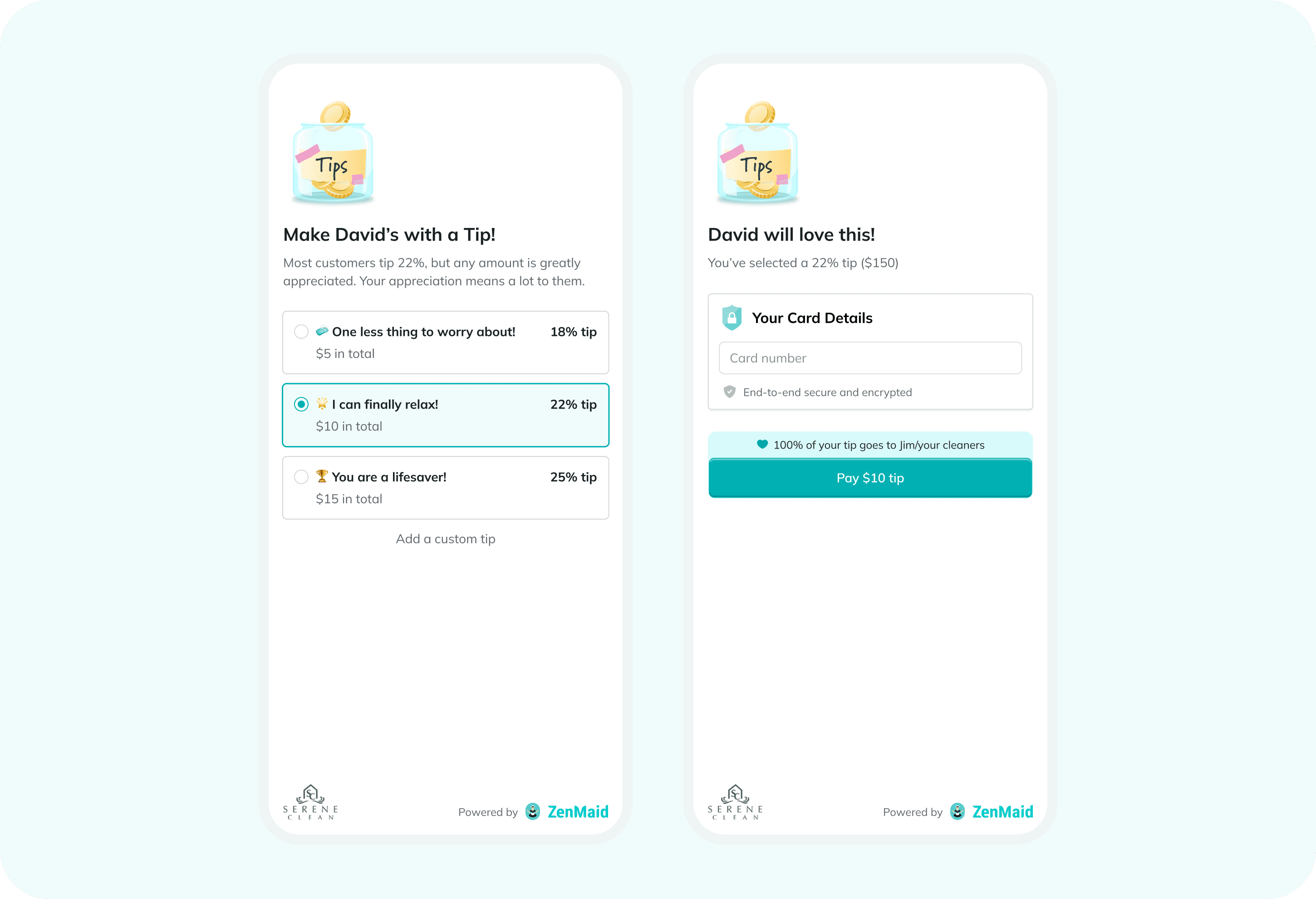
When Bob was asked about ZenMaid, his recommendation was to visit cleaning business owners and understand how they think and run their business, not just how they use the software. Watching how someone actually works, before you introduce your product into the conversation, gives you better ideas than any feature interview.
5. Ask an LLM you've been using regularly: "What outdated mindset am I holding onto that's no longer serving me?"
The answer Bob got shifted how he thought about control and leadership. His suggestion is to run it with an LLM that has enough context on you to give a real answer, not a generic one.
INTRO
Jim Zarkadas (00:00) Hey, I'm Jim, and this is the Love at First Try podcast, a podcast for SaaS CEOs and developers that truly want to learn more about design and care about it, but there are no designers that find it too complex. In every episode, we discuss how to design products that become sticky and unforgettable. We dive into the topics of taste, UX, growth, and conversions, and we share practical tips and frameworks you can add into your development process. Enough with the intro — let's dive into today's episode.
Who is Bob Baxley?
Jim Zarkadas (00:28) Thanks a lot for joining me again. It's an honor. And I love that we have the chance to discuss today and go deep into all these topics that we both have in mind. We always start the podcast with a quick intro — I always ask the guests to introduce themselves and tell a bit of their story and what they're currently working on. So yeah, if you can elaborate on this, that will be amazing.
Bob Baxley (00:53) Well, first off, Jim, thanks for having me. It's a real honor and privilege to be here. And for all of you out there listening, I appreciate you joining in and hope it's a useful conversation for you as well.
My name is Bob Baxley. I'm a software designer who lives and works in Silicon Valley. I moved here in 1990 when I was 27 years old — I'll let you do the math on what that means. I've been working in the industry for 35 years. I started on desktop products, working for a company called Claris, which was a wholly owned software subsidiary of Apple. There I worked on the first couple of versions of Claris Works, and had some work in MacDraw and some other products.
From Claris, I eventually moved into management, and spent some time as Director of Design at Yahoo, where I led the team that worked on Yahoo search products — most notably, I launched Yahoo Answers and helped design the original version.
Then I had the chance to join Apple in 2006, which was a very fortuitous time to join what would become one of the most important companies in history. I joined about nine months before the phone was announced, leading the design team that worked on the Apple online store. So if you ever went and bought Apple hardware at apple.com, that was the part of the product I worked on.
Jim Zarkadas (01:48) Mmm.
Bob Baxley (02:17) Obviously it was an amazing experience working on the online store. I did that for six years, and then worked on the corporate side of Apple retail for two years, which was also absolutely fascinating — a very unexpectedly fulfilling experience, understanding retail and designing products that are used inside the stores by employees. It's a fascinating aspect of design, working on employee experiences. It opened up my eye to a whole different part of the economy and a different type of design and experience.
I left Apple in 2014, I believe it was, and went to Pinterest during a high-growth period of that company — I was there from 2014 to the middle of 2016. Then I spent a few years kind of wandering around, trying to figure out what I wanted to do and how I felt about tech. This was between 2016 and 2019.
Then I decided I wanted to get back in the game and was fortunate to find a role leading design at an enterprise software company called ThoughtSpot. I was there for just over four years. That got me a lot of exposure to working for a company that was largely based out of India — although the company had been founded here in Silicon Valley and most of the execs in our headquarters were officially here.
Jim Zarkadas (03:13) Hmm.
Bob Baxley (03:38) The bulk of my team and virtually all of engineering was located in Bangalore and various parts of India. So I did get to travel to India — especially after the pandemic and the quarantine, I spent seven trips to India in 18 months, which is not something I would recommend, but it was quite memorable and meaningful to me.
I left ThoughtSpot two years ago this month. And to be perfectly honest, at 62, I'm trying to figure out what to do now.
Jim Zarkadas (03:53) [laughs]
Bob Baxley (04:04) I wish I could give you a clear story of what I've been doing. Yeah, after 35 years in tech, it's a little murky as to what you do next. So that's where I'm at right now.
Jim Zarkadas (04:14) Yeah, right. Like a beautiful story. It's always a challenge deciding what to do next — it's such a deep thing and so personal, on where you find meaning. I went through a similar phase actually when I quit one of the companies I was working for in the past. I was at a point where I was like, maybe I want to become a kite surfing instructor — I'm into kite surfing and I really love it. I was like, what if my life wasn't in tech? What would be that version?
Bob Baxley (04:41) Mm-hmm.
Jim Zarkadas (04:46) So I didn't do anything like that because then you start thinking about all the consequences. But it's a very interesting process to go through, because I feel like it really helps you learn yourself a bit deeper and understand what you truly want versus what you don't want.
Falling in Love with Computing
Bob Baxley (04:54) Yeah, I think I'm a little fortunate in that the first time I saw a computer, I was 11 years old, and it was a very early-stage Heathkit computer that a friend had built with his father — it was based on the original Intel chip. And I just fell in love with computing. I remember the moment vividly. It was almost 50 years ago and I remember it like it was yesterday.
The only thing I can compare it to is when you'll occasionally hear Broadway stars talk about how they were a little kid and they went to go see a musical, and just being near the stage and seeing all the actors and singers — they were just moved by the whole theater experience and they knew that's what they wanted to do with their life. It's sort of like that for me. I just fell in love with computing.
Bob Baxley (05:56) I don't necessarily love the tech industry as it's operating today, but I love computers. And so I don't fantasize about going and being a kite surf instructor or really anything else. The thing I struggle with is, at this point in my life, how can I best engage with the industry to be useful to other people, and to give me opportunities to grow and continue to learn?
And I do think we're at an interesting inflection point where a lot of folks — especially if they've been in the industry for a while, but even some people trying to get started — they're looking at the industry and saying, is this really what I want to be a part of? And am I going to do what's needed to make this transition to a more AI-based work environment? I think there'll be a lot of people that just decide to opt out. There are economic consequences to that, but there's also happiness and stability consequences as well.
Bob Baxley (06:52) So I think there are a lot of people, at least in my circle, that are trying to understand the value proposition. I could be leading a very different life than the one I'm leading. What does that mean?
The Story of Seeing a Computer for the First Time
Jim Zarkadas (07:03) Since you mentioned it — I'd love to go into that topic. What is the thing that made you fall in love with tech? And the other part is: you mentioned a separation between tech and the tech industry, and people kind of opting out. So what is the thing you're seeing that doesn't feel right, and why have you seen people in your circle opting out with the whole AI transition?
Bob Baxley (07:35) Well, let me go back to the story of how I fell in love with computing. Many people in the audience may not remember the first time they saw a computer. Maybe they remember the first time they saw an iPhone. But computers have been around long enough that you have to be close to my age to have a clear memory of that first encounter.
In 1976, or thereabouts, there weren't that many computers around. The word "computer" existed, but only in the mainframe corporate sense. There wasn't really this idea of personal computing.
My particular story: I was at my friend Clint Wilkinson's house — I knew him and his family through the church we went to in Dallas, Texas. His father, Tom, was an engineer at Texas Instruments. Sort of your classic nerdy Apollo-era engineer with the white shirt and the pocket protector. Heathkit was a company that operated in the United States that would sell you the components to assemble electronic things yourself — oscilloscopes, radios, in this case a really early, primitive personal computer.
Bob Baxley (08:01 cont.) So on this particular day, I'm over at the Wilkinsons' house. I go in Glenn's bedroom — it's a total disaster and a mess. But down at the end, set up on a piano bench, he has this black-and-white monitor, and then this metallic box that's got like a keypad on it and a little LED readout like a calculator. And then, for the first time in my life, I saw a typewriter-like keyboard that was not part of a typewriter — connected to this metallic box through a cable.
I think it's pretty hard for many people to put themselves into that moment and realize how novel it was. But honestly, I'd never seen anything remotely like this. So Glenn sits down on the ground, he starts typing things onto the keyboard, and they show up on the monitor — which is also something I had never seen before. TV was a broadcast medium. The idea that you could generate an image that would show up on something that looked like a TV monitor was completely new to me.
Bob Baxley (09:57) He would type a letter and it would show up on the monitor. I could kind of get my head around that — it felt like a video typewriter. But then he typed two or three things and the screen started printing out a whole bunch of stuff. In retrospect, what he did is he ran a Basic program — Basic being a programming language. He executed a program and the program spit out a bunch of extra stuff.
In my mind, I had never witnessed something where you typed a few things on a keyboard and a whole bunch of other stuff came back in response. And in that moment, I think some part of my 11- or 12-year-old brain said, oh my God — there is something different and magical and miraculous happening inside that metal box. And I do not understand it.
Bob Baxley (10:57 cont.) And then, you know, the school I was going to at the time — one of the parents actually bought an early Wang computer, kind of a primitive PC. And I learned in sixth grade how to program in Basic, which is an early-stage interpreted computing language, very similar in structure to Python. It turned out my brain was very well suited to programming.
So by the time I was 13 or 14, I was absolutely in love with computing. Then it turned out my parents couldn't afford to buy me an Apple II. They did take me to the computer store in Dallas — Mr. Micro, out in Richardson, Texas, just outside of Dallas. I still have the brochure in my closet right over there — the brochure I picked up that first day for the Apple II, which has an apple on the cover with the headline: Simplicity is the ultimate sophistication.
And I remember that visit to Mr. Micro really clearly as well. I think that visit is when I fell in love with Apple. And then through a longer sequence of events, I eventually discovered software design when I was 27, working for Claris in Dallas as a sales rep. They had opened a UI job in California to work on a product called Claris Works. I came out and interviewed for it, and because I had previous experience running a graphic design studio, it turned out I was a good fit to become a UI designer. And that's how I moved to California.
Jim Zarkadas (12:51) Got it. That's a hello story, right?
Bob Baxley (12:55) So yeah, it's a lot of random stuff. And I think this is important for everybody to keep in mind: the opportunities that life's going to bring you are highly dependent on the year you were born. You don't get to be Steve Jobs if you're born in 1982.
Jim Zarkadas (13:10) Yeah, that's a good point. That's something I'm experiencing more and more since I started getting into entrepreneurship — the power of timing. Because many times I want to feel like, no, it's all about effort and coming out with smart ideas and being consistent. Sure. But there is a timing aspect that sometimes only happens once in a specific time.
Bob Baxley (13:43) Yeah, most all of this happens only once. You don't get to be around for the advent of the web again. That was a one-time event.
The Tech Industry Today — Speed, Pressure, and the AI Era
Jim Zarkadas (13:47) Talking about one-time events — it's a perfect segue into the tech industry and the AI topic. What is the thing you see in the tech industry that you're not happy or excited about, and what direction do you think it's changing?
Bob Baxley (14:22) Yeah, well, look. I think the pressure with generative AI is for everybody to move faster. And I think companies have understandably — and I try to be really non-judgmental about this — responded to that. I have deep feelings about how I want to behave as a designer, but I also try to set that aside when I'm looking at what's happening in the industry, because I don't want to cloud it with what I wish it was.
In the industry right now, there's an enormous amount of money to be made. There's incredible economic pressure coming from executives, from VCs and investors. People care mostly about how to make as much money as quickly as possible, and that means you just have to move fast. Moving fast is not what design is set up for. Design is this contemplative — let's take a moment, think about it, try to create something that you're proud of and that's going to last.
Bob Baxley (15:19) That works sometimes, but it probably doesn't work for a lot of companies today. The idea of design is that I can take in all this information, I can pause, process it, and then come up with a solution. But that really only works if the foundation that you're working within is going to be stable.
So for example, Figma — it took them three years to go from starting the company to having something they could show to users. There's no way you could spend three years today building the first version of a product because the foundation on which you're building would be completely different by the time you were done. In an era where the reality of the tech is changing so quickly, it may be that the smartest strategy is just to move as quickly as possible and see where it goes, without having a big vested interest in what the outcome is. That is profoundly unsatisfying as a designer. And I'm not at all convinced it leads to good outcomes for users, but it's not an irrational business strategy, sadly.
Bob Baxley (17:12) So I think there are people who worked in a different era of design — where you did have the opportunity to sit and think and make something you were proud of, something that had meaning, something you could express yourself through and that you could really touch and improve people's lives with. That's kind of what design was for a long period. And that's not really what the tech industry largely is right now. The tech industry is just a speed race. And there are a lot of people that really like working the other way that simply don't want to work the new way.
I don't criticize anybody for deciding they don't want to play anymore. That's totally rational. I think the people that are in trouble are the people that kind of want to play, but want to play by the old rules. They're trying to function in the old way but living in a new environment. And that's just — you're going to be roadkill in that scenario.
Jim Zarkadas (17:18) Exactly. Yes. Fully agree. I'm curious on what you're saying on the speed part — what are the things that you're seeing? Is it that you need to see a feature the next day?
Bob Baxley (18:11) Yeah, so again, I haven't been in a regular operating job in two years. So everything I'm telling you is by anecdote — talking to other people inside other companies and reading people's LinkedIn posts. My sense, from some of the people I've been mentoring who have recently gotten jobs, is they just talk about the velocity of requests and demands coming at them. In the past, if they were going to do a design for a feature, they might expect to get a week or two weeks to show a first draft. And now it's like a PM might bring them a question in the morning and expect an answer within a few hours, or certainly by the end of the day. And they're dealing with more and more engineering teams.
There's also this sense that you could just feed an AI engine something like a PRD and it's going to produce some screens. Right. Now — yeah. There are a lot of people who aren't close to the rubber that still think that's the reality. And there's also a lot of people that just think that's good enough.
Bob Baxley (19:31) I think growth design is a really interesting model for where design in general might be going. We were running dozens and dozens of experiments all the time at Pinterest. And the thing I realized with growth design is — you have to not hold on too tightly to what you want the solution to be. You have to know directionally where you want to go, but you have to entertain a lot of wiggle room and be willing to try variants that maybe don't feel right to you, but end up performing really well.
If you think about graphic designers — Paul Rand did one version of the Next logo. He didn't even show Steve Jobs alternates. It's like: this is the version. And by the way, you owe me a few hundred thousand dollars. That doesn't really fly today. The people buying the design just want something that's good enough as quickly as possible, and that's profoundly unsatisfying to most people who in their heart are designers.
Product-Led vs. Sales-Led Companies — A Better Lens Than Bootstrap vs. VC
Jim Zarkadas (20:35) Yeah. I want to share some thoughts from my side. One thing I've seen is that there's a difference between bootstrap companies and VC-funded companies. We work mostly with bootstrap companies as a team. What the bootstrap companies have is a very solid culture — it always starts from the leadership — and not so much pressure from investors. With VC companies, I see constant pressure: faster, more, more designers. And then you have people that are more like insurance brokers starting a SaaS product — they're not really product people.
Bob Baxley (22:13) Mm-hmm. Mm-hmm.
Jim Zarkadas (22:23) I feel it really comes back to the leadership culture. How do the top people in the company think? Because this just kind of expands to the whole company. If it's just typical executives, AI is going to make them super delusional — they'll think there's a magician that can create solutions. But I feel it really comes down to the culture and the quality standards.
And how I've been experiencing AI is — I feel kind of liberated. I've always said that my problem with Figma was that it was too much of a drawing, and I come from an engineering background. I'm like, I'm building a product. I want to work with the material. I can't just create sketches and then hand them over to an engineer.
Bob Baxley (23:37) Yeah, yeah. Yeah — you have to be able to work in the medium in which you're creating.
Jim Zarkadas (23:49) Exactly. And that's something I find really beautiful. I find myself jumping between Figma and Claude depending on the phase I'm in, the level of detail I want to work on. It's very interesting with AI how the design process is changing and how personalized it can become to every designer — because you can just build your own workflows.
Bob Baxley (25:01) Yeah. Let me try to unpack two things. The first: your split between bootstrapped and VC-funded. A different way to think about that is the distinction between companies where the product exists to fuel sales, versus companies where sales is in support of the product. Does the sales team drive the bus — telling the product team what to develop because then they can do more sales? That's probably 90% of companies. But then there's another group of companies — which you're saying are bootstrap companies, which I think is true but not always — where the product exists and sales is in support of that product. Like: we're going to make the product we love, and the sales team's job is to go sell it.
That's how Apple works. If we look at Salesforce, for example, it seems to me that they're largely driven by their sales team, adding features to address the needs of paying customers — which is largely the same for Zoom. Almost all enterprise companies operate that way.
Bob Baxley (26:31) But there's a small group of companies — Pitch was one; Apple for sure; also Lego, Leica, Patagonia — plenty of companies in the economy where they make something they care about and the sales team's job is to go sell it. And as a designer, you have to be really cognizant of which kind of company you're signing up for, because they do not change. If the founding principle of the company doesn't believe in product and doesn't believe in design, they will never graft it on. It will never happen. Amazon, Microsoft, Google — they will never, ever be design-driven. They just will never make that switch.
Bob Baxley (27:00 cont.) The second thread: executives just coming to the design team and saying, just spit something into the AI and let's see what comes out. I think the industry has done ourselves a huge disservice by not really showing our process to the rest of the company. Designers tend to take in all the information, then go into their library-like environment, sit together, throw around ideas using kind of strange words and vocabulary — all very secretive — and then come out with two or three solutions which, if they're good, look really obvious. If it's a really great UI, when you first see it, you're like, well, yeah, of course — how hard could that be?
Bob Baxley (27:58) When I was working on the Apple online store, we introduced a buy online, pick up in store feature. We did 82 different versions of that. Eighty-two numbered versions. And when it finally shipped, it was two radio buttons in the cart. Do you want to pick it up or do you want to ship it to your house? That was basically what the feature came down to. But it took us 82 versions to get there.
If the executive team and the rest of the organization understood all the different permutations we were going through and all the different arguments, they would have thought very differently about the design process. But what they mostly thought is that we were just told some requirements, something magical happened, and then we spent our time drawing them. And drawing them is not the issue. As a design community, we haven't really let people in to understand the debates and the things we're considering to get to the solutions. So everybody from the outside thinks it's super easy — and it's natural then that they would think: why can't AI just do this?
Showing the Messy Middle — Running an Internal Influence Campaign at ThoughtSpot
Jim Zarkadas (28:59) Yeah, fully agree. One of the things I'm trying to do is more collaborative design — design workshops that include more of the team. I realized I was afraid in the past, like, no, I can't show them all these ugly designs I'm creating. But once I started experimenting with workshops, I realized the design gets better, it's more fun, and the whole team enjoys it more.
Bob Baxley (30:25) One of the tactics we did at ThoughtSpot that I thought was really powerful — one of my co-leaders had this observation that we were basically all on TV now because the company was remote and distributed. We communicated a lot through Slack and Zoom. He said: okay, so we're all on TV, and we have all these internal communication channels, which we should treat like social media. We should basically run an influence campaign inside the company.
So what we started doing — and we did it for about 35 weeks before I ran out of steam — is we would make a video every week that was about 22 minutes long, made in Loom. The video would start with me introducing what the team was working on that week. The group was divided into three different studios — smaller teams working on different parts of the product. So I would talk for a few minutes, then each one of my studio managers would go through and describe what was happening in their studio. They would show projects at whatever level of fidelity they were at — sometimes really simplified block frame diagrams, sometimes wireframes, sometimes high-res prototypes, sometimes nothing but words on a whiteboard. Whatever it was, they would just kind of expose what they were working on and what the issues were. Then I'd come back at the end with some sort of design story, which I typically took from the Apollo program.
We would send that to the whole company through a Slack channel every week. Out of a company of 600, the first couple of videos got around 400 views. Later it would be down to 150 or 200, but they became known inside the company to the degree that the sales team started to understand what we were doing. Some of the sales guys would come up to me at company meetings — I'd have no idea who they were — and they would say: I know you from the videos.
Bob Baxley (32:20) And what everybody realized was that they would see all the ideas we were playing with and all the variants, and they developed a much better appreciation for the level of ambiguity we were trying to work through and the level of thoroughness we were using to arrive at our solutions. It completely shifted how they thought about what the team was doing. We never had trouble getting headcount after that. We didn't have trouble getting a seat at the table. All that went away. In fact, design at ThoughtSpot became one of the four competitive pillars of the company. When you saw our sales presentation, you'd see design as one of those things.
As the head of design, I started getting invited to sales calls to help close deals or convince teams on what was going on. We just, through those videos, dramatically raised the profile of design by showing the messy middle.
Choreography Over Control — and the AI Prompt That Changed Bob's Thinking
Bob Baxley (32:46 cont.) I'll share a little aside that might be useful. About two years ago, I saw this prompt on LinkedIn to try on ChatGPT, and I ended up running it. The prompt is: What is an outdated mindset that I'm holding onto that is no longer serving me?
I suggest everybody run this at home with an LLM you've been using a lot, so it understands you a little bit. What it came back with in my case was: given your age and your profession, it's not surprising that you're really attached to the concept of control — but that's not the world we live in anymore. And it had this phrase which was meaningful to me, though I know it's just statistically derived: you need to emphasize choreography over control.
I now really take that to heart. Choreography over control. I think when I was in operating design roles, I wish I had held onto that a little bit more. The design leaders that I see being really successful — they're better at being choreographers and not trying to hammer down control.
Bob Baxley (34:38) And certainly being at Apple, you were supposed to control every last little pixel. And I think that's actually what's been culturally challenging for Apple in the era of AI and probabilistic computing over deterministic computing. They can't control it the way they're used to controlling everything else. At ThoughtSpot, I got a little more hands-off and more comfortable sharing with the company all the stuff we were going to throw away. I was more comfortable letting them see behind the screen. And it helped them understand and appreciate and ultimately respect a lot more of what we were doing.
Jim Zarkadas (34:49) Yeah, it's a beautiful story. And yeah, the prompt — 100%. I'm going to do it after the podcast. I'm really curious now.
Bob Baxley (34:56) You'll be shocked. I've done a couple of workshops now where the only thing I plan for the workshop is the prompt. You get a bunch of people around the table, give them the prompt, they all input it, and then you just watch their faces one by one — they're just like, oh my God. And then you just see where the conversation goes. Every time it's been magical, absolutely magical.
Choreography vs. Control in Design Presentations — "Show Me the Comps"
Jim Zarkadas (42:58) You already started the story, but I'm curious about an example of choreography versus control — just a simple concrete one.
Bob Baxley (42:55) I mean, just at a personal level, with the choreography and control stuff, I've just gotten much more open about sharing things on LinkedIn that maybe aren't complete. There was a couple of weeks when I just sort of made videos and put them up there, not really knowing where they were going to lead. And they ended up being some of the best-performing stuff I'd ever done.
Bob Baxley (43:51) I think a lot of it is about giving yourself up to the idea that you don't know what the result's going to be. And as a designer, that can be pretty hard. If you think about design presentations — a lot of times designers come in and try to explain everything before they show the work. They're trying to set up: this is the business problem, this is the input I got. And then eventually they show the work. What that whole thing is about is they're trying to eliminate the risk of you not liking the work. They're trying to pre-sell it so that by the time they show it, you're already bought in.
One of the things we learned at Apple is that none of the executives would ever sit through the setup. They just don't care. None of them would let you set the work up because they knew that you didn't get to set the work up when the user saw it. So they wanted to have the user's experience of it — which is: just show me the thing and I'm going to respond, and then we're going to deal with it.
Bob Baxley (44:49) So it was very frustrating a lot of times when candidates would come to present their portfolios to me. I was always just like, stop it. Show me the comps. Where are the comps? I was sort of famous for that. The woman that ran design ops for me at Pinterest used to just laugh about that all the time. One of my lines was: shut up and show me the comps. I don't care. I don't need the setup. I don't need to explain the business. Just show me the comps.
Jim Zarkadas (44:57) Yeah, yeah, yeah, yeah. I fully, fully hear you. And that's a good one. From a personal point of view, once you get into entrepreneurship, you have to start being way messier than you are as a designer. I now need to develop two sides of myself: the designer that has a very clear vision, and the entrepreneurial side, which is more of the "mess around and find out" kind of way.
Even this podcast — you could try to make it perfect, control everything. Or you can just keep it simple and go: I'm just going to publish a nice conversation and that's it.
I also find this interesting in the world of growth design with A-B testing. I believe in A-B testing, but I don't believe in outsourcing taste and thinking and decision-making to A-B testing. You just need to figure out the right way to use it. Sometimes you can have full confidence in a solution, but the market can prove you wrong. That's why I mentioned the entrepreneurial part.
Bob Baxley (46:28) Yeah, look, I think designers need to get more comfortable with ideas like choreography and improvisation. You need to think of yourself as more like you're in a jazz band than in a symphony orchestra. You're not playing from the dots. You're not performing the same thing every time.
When I was a hiring manager and doing portfolio reviews, I would interrupt designers all the time when they were presenting. I wasn't going to just sit there and let the lecture go on. I was always stopping them, asking them questions, poking on the work a little bit — which I'm sure some of them thought was just me being rude. What I was trying to do was test how good they were at thinking on their feet and how well they could respond to criticism or observations in real time, because that's a critical part of the job.
Micromanagement vs. Into the Details — Apple's Culture of Caring
Jim Zarkadas (47:05) Okay, let me think about the next topic. I want to dive a bit deeper into the Apple and Steve Jobs time of your career. Something that Brian Chesky, the CEO of Airbnb, has been talking about recently — the difference between micromanagement and being in the details. I'm curious about your experience on this topic. What does it really mean to have leadership that is truly into the details?
Bob Baxley (48:15) Yeah. To me, micromanagement is: my boss is telling me how to do things. They're micromanaging me at the methods level — telling me how to do my job. Whereas an executive who's into the details is critiquing my output but doesn't say anything about my process. And I think that's an important distinction. Once somebody gets into your process, they're into your business. The principle is: I'm going to do things my way, leave me alone and judge me by what comes out the other end.
Micromanagers will make everybody crazy. Somebody who manages the details just looks like they're paying attention. At Apple, there's just a culture of everybody paying attention to all the details all the time, because that's what matters. And it's not just executives asking all these detailed, pointed questions all the time — everybody in the company, everybody you interacted with, was asking stuff all the time, because they all had a vested interest in the company producing something as high quality as could possibly be. The bar was world class for everything, everywhere, all the time. Which can also be quite maddening.
Bob Baxley (50:31) There's only a certain type of person that survives at Apple for a long time. But one of the stories I like to tell — at least at the time when I first started working there, you go to Café Mac, the cafeteria there at the company. You'd get a pizza, and it would come in your standard square cardboard pizza box, and it would have a big blot of oil underneath it. And eventually the pizza guys invented their own pizza box. It was made from a different kind of material. It was round and it was rippled so the pizza not only stayed warm longer, but also the oil dissipated in a different way. It was an all-around better pizza box. My understanding is they got a patent on it — though I haven't confirmed that one way or the other. But that's an example of somebody deep inside Apple just asking themselves: how can this be better? And the entire company is that way, all the time.
Bob Baxley (50:31 cont.) There are plenty of stories of Steve asking some pointed detail about something on the online store. On occasion I was in email threads where he had gotten an email from a customer asking about something, and he or somebody on his team would forward that off to different groups around the company to get them to work on it.
You, or some of your listeners, may have read that with Tim Cook's recent announcement of stepping down, he talked about how he starts every day at around 5am reading inbound customer emails. That's something I don't think people realize the power of for Apple — both in the case of Tim and Steve, because they both had very public email addresses. Apple has an army of fans and users around the world that hold the company to very high account. And when design fails, those people send notes to the executive teams and those executives escalate those.
Bob Baxley (52:27) I know there's a lot of frustration with the Liquid Glass release, and people thought it was really bad. But just ask yourself: the mere fact that you can be this disappointed and upset tells you how high a regard you have for Apple. There's really not another company that could release a design that far off the mark where you would care that much.
And I actually think Tim has done an amazing job maintaining accountability around design in his own way — but around the issue of privacy for the company. People inside Apple now realize that privacy is sort of an existential value, and if they flub that up, it's a real issue. Do the thought exercise: imagine there's a data leak and all your Instagram credentials get shared. You'd kind of go, yeah, kind of expected that. Now imagine that happens to your Apple accounts. You'd be like: wait a minute — I can't believe those guys messed that up. You're going to be upset in a very different way.
SECTION 10: World Class Quality vs. Real Constraints
Jim Zarkadas (53:36) Yeah, that's a beautiful one. Okay — on the world class part. It's a personal challenge that I have all these years. You want world class quality — that's what inspires you, that's what you aim for. But then there are the real-life constraints of timelines and resources. One of the principles I love from Basecamp, Jason Fried and DHH, is: flex the scope and keep the deadline fixed. It's a principle I kind of love, because the more time you give something, the better you can do — but it can also be a dark hole that goes against business principles where you need to make progress. Sometimes I'm like: screw the deadline, we need to make it better. So yeah, I'm curious about your thoughts.
Bob Baxley (55:20) Yeah, so look — world class might be the wrong standard. World class is a result, it's a consequence of a lot of things. I think at the individual designer level, you have to realize that the constraints of the project — how many resources you have, how much time you have — are the frame. And within that frame: is the thing you produced the best work you could do given all those factors?
If we think about it in sports terms: if I go to set a PR running a 5K and I'm feeling great and I set a PR, terrific. If I'm older or I'm injured and my time is less, I still put in my best effort. I should still feel great about that race, even if the final outcome wasn't as good.
Bob Baxley (56:17) With every design you produce, you just have to constantly be asking: is this the best I could do given all the circumstances? Or at some point did I just fold? Did I get too tired and give up? When it comes to deadlines — did you run through the tape? Did you do everything you could given the time you were given?
I've always tried to hold my team more to account on that: did they do the best they could given the resources and time they had? And then I looked to the company. I've never argued with people about headcount. I've always told executives: the company funds my team at the level they're comfortable investing. My job is to give you a good return on that investment. If you want to give me 10 heads, I'm going to give you 10 heads of design effort. If you want world class design, I'm telling you that's probably more like 15 to 20 heads. But you can tell me that doesn't matter, and I'm going to trust that — because you're running the company.
Bob Baxley (57:42) I'll also say on the deadlines thing — if I had more time, I could make it better. Actually, you couldn't. There's a point where more time becomes a really negative factor. I can't remember which artist it was, but they said: I don't need more time. I need more deadlines. And John Lasseter from Pixar had a great line: our movies are never finished. They're merely released. The trick is to set a deadline that gives you enough time, but not quite.
Bob Baxley (58:15) Look at the Beatles — just as a top-of-mind example. Everything the Beatles did, from their first album to the rooftop concert and Abbey Road — the whole thing, all those albums, all those tours, the movies, all of it — that's like seven years. I don't think the Beatles get better if you give them 14 years. I think they got a lot done in seven years. And then unsurprisingly they were completely burnt out and spent and needed some downtime. But three of the four of them went on to have amazing solo careers as well.
Taste, the User Base, and the "Three Favorite Apps" Exercise
Bob Baxley (1:01:11) One of the questions you raised is really interesting: how do you raise the taste level of your engineering team? And one of the reasons I have not been a supporter of the argument that taste is going to save design and differentiate products — is because I don't think the user base is particularly sophisticated. And if the user base doesn't value taste, I don't know how you compete on taste.
Just look across the world — most of the most popular products are not the highest quality. If you think Americans have great taste in food, then you have to wonder why McDonald's is the most popular restaurant in the country. Those things don't align. If you look at Instagram, you get the sense that not that many people have particularly good taste in photography. They may be getting good at the production values of photography, but I challenge you to remember any picture you've seen on Instagram other than from friends and family. They just have no meaning. Whereas in your head, you could probably pull up ten Pulitzer Prize-winning news photographs.
Bob Baxley (1:02:36) So when we look at software — do users, engineers, executives really understand what a great software experience is?
An exercise people could run: get a small group of engineers — five to ten people. Go around the room and ask: can you name your three favorite apps? I'm yet to meet a designer that can name their three favorite apps. Usually when I ask that question, people are just stopped in their tracks. And then they open their phone and start highlighting things they use all the time — which has nothing to do with whether it's a good product. They just happen to use it all the time. That's usage. Whether or not you think it's well done are two completely different things.
I think the Goldberg Variations is the most amazing piece of music ever written, but I don't listen to it every day. So just by calling people's attention to actually watching software and thinking about what's good — getting them into that conversation of what are your three favorite apps and why — as a design leader you could probably facilitate the discussion. You don't really have to tell them why A is better than B. You just have to get them to start asking those questions, and they'll start to develop their own natural philosophy.
Bob Baxley (1:04:00) And I'm not going to put you on the spot here, Jim, but if you're listening at home, just in your own head — most of you are designers, for goodness sake. If you were musicians or filmmakers, and I asked you what your favorite album or favorite movie was, I couldn't get you to shut up about it. You'd go off. You wouldn't be able to name three because there would be so many candidates. And yet all of us have spent decades working in tech, and off the top of our head, we couldn't name three products we really like because they're so well done. That's just a crazy gap.
Bob Baxley (1:04:30) When we talk about taste — even in graphic design — I live in the United States, and graphic design in the United States is just terrible. Go to Japan: graphic design in Japan is pretty challenging to parse, actually; software design in Japan is absolutely horrible — shockingly bad, and they sort of know it. You go to Europe: graphic design is incredible, industrial design is incredible. So taste is going to be the thing that separates software design from everything else. And I don't know how we get people to develop some better taste. And how do we do that?
How Companies Compete — Functionality, Business, Then Design
Bob Baxley (1:06:33) I gave a talk years ago about how every company — and actually every industry — starts out competing on functionality. And then once functionality has commodified and equalized, they start to compete on business things: distribution, pricing, enterprise sales, supply chain optimizations, all the business stuff. And then after all the business value has commodified, then finally you can start competing on design. But you can't compete on design unless you have all those other things down.
If we look at Google — none of us use Google because we think they have incredible UX. We use Google because they have incredible capabilities. They haven't had to move beyond that because nobody else can reach what they can do functionally.
Then we look at Amazon. Why do we use Amazon? Because they're crushing it on the business stuff. Their distribution network, supply chains, delivery — they just nailed it on all that. There are many much better e-commerce experiences, and many places where I can replace most of the functionality of Amazon. But I can't replace the delivery times, the availability.
Bob Baxley (1:07:59) And then you have companies that have to compete on design, and Apple's a good example. They have to have all the functionality — Apple wouldn't survive if they didn't have parity on functionality with most everybody else. And then they've got all the business stuff: incredible supply chains, incredible ops, incredible retail stores. So now they get the opportunity to compete on design, because that's how they differentiate themselves. And it works really well for them — they have these 35% margins on consumer electronics when their competitors are getting 5%. That's the value of design: how much more profit margin they're able to generate, even though they're less than 50% of smartphone sales around the world.
Bob Baxley (1:09:23) And so design is how we show empathy and care. One of the things I like about working on software is that I've worked on products used by a billion people. Like — nobody knows who I am. How many other industries could I work in where I could touch a billion lives? None. This is it.
It's very easy to lose track of the fact that there are a billion people on the other side of the glass, which I think is what makes it so easy for companies to make bad choices on behalf of users — they just don't see the downstream benefit.
Bob Baxley (1:09:50) I personally very much want to live in a Golden Gate world. When I look at the Golden Gate Bridge, my heart is lifted, my soul feels better. Every time I drive across that bridge, I look out the sunroof to see those towers. I've done it hundreds and hundreds of times and still I do it. The Bay Bridge is a perfectly great bridge — it gets me across from Treasure Island to San Francisco quite well — but it doesn't lift my soul in any meaningful way.
How to Become Truly User-Centric When You're Not the User
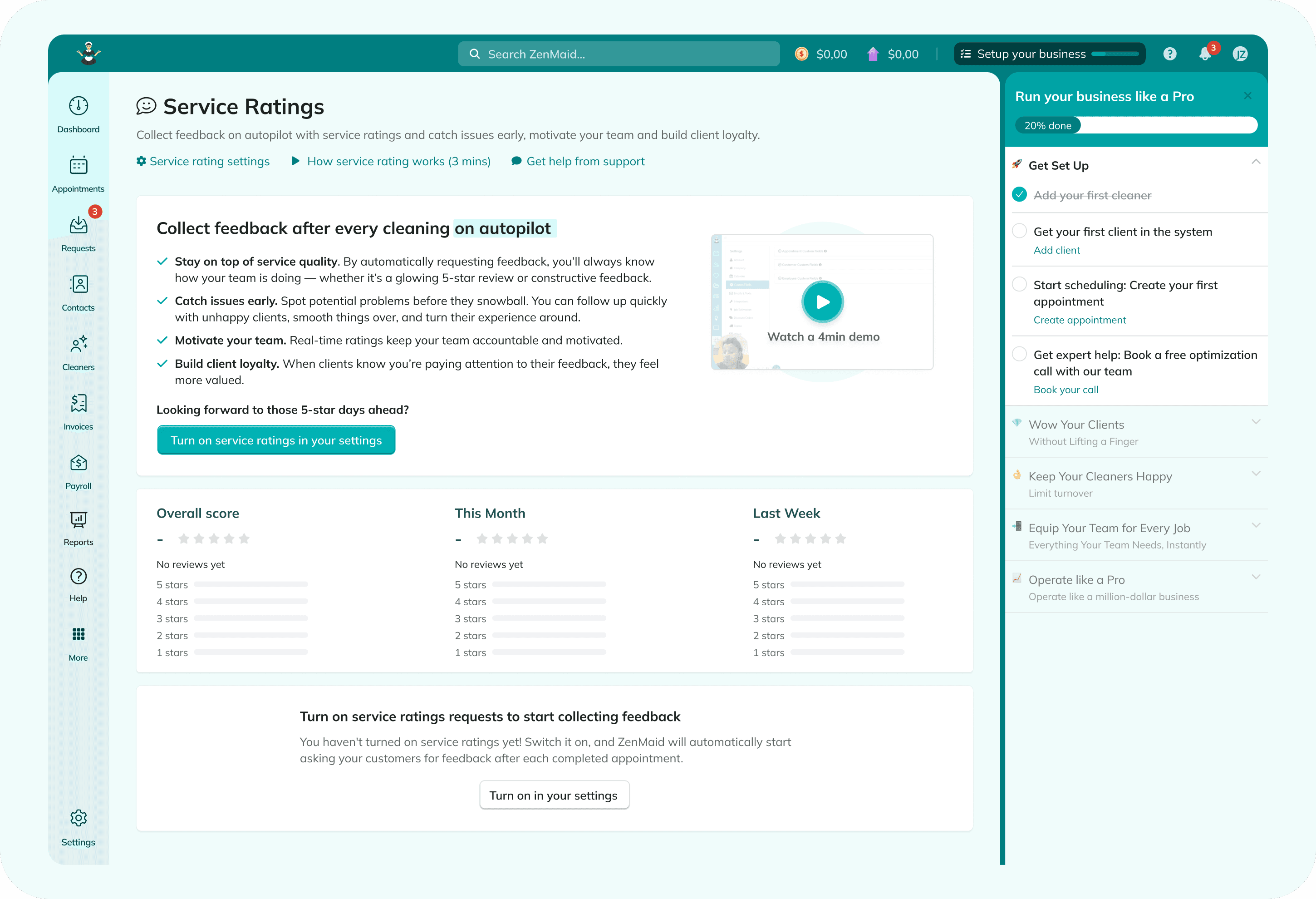
Jim Zarkadas (1:14:36) I know we're a bit over time, but if you're okay, I'd really want to go a bit deeper into this. How can you become truly more user-centric when you're not the user? I'll bring an example of a team I'm working with: ZenMaid. It's scheduling software for cleaning businesses — imagine a cleaner transitioning to a cleaning business owner. They hired three or four cleaners and use software to manage the schedule, send invoices, collect payments, pay their team, and essentially run the whole business. They spend hours every day using that software.
One challenge I have on design is that I'm not a cleaning business owner. I need to design for them and empathize with them. And I've been looking into creating rituals — not just doing one-time user research where you do a bunch of interviews and then disappear for the full year, but actually building rituals that bring me closer to them. One was that we have a really good customer who's joining our design reviews — one perspective is better than none. And we have this idea where we should go rent a van and travel through the U.S. visiting cleaning business owners and just talking to them and seeing how they're experiencing ZenMaid. So yeah, I'm curious about your thoughts.
Bob Baxley (1:17:22) Yeah, so look — your instinct on it being a ritual is totally the right one. Research is not a one-shot deal. It's got to be something where you're refreshing it all the time — ideally weekly or bi-weekly, and you need to be in constant contact with your audience.
One of the things we started doing at ThoughtSpot — which was wildly more useful than I expected and is generally accessible to people working in bigger companies — is we involved customer success people in design. Almost all enterprise software companies, once they get past a certain size, are going to have a customer success team. Those people are incredibly good proxies for your users because they're seeing what the audience is dealing with at all these different points in the software. They already work for your company.
We took some of those folks and we learned — I'd been there a couple of years before we realized — that for every major project we really needed a customer success person on the design team early, to help us shape the product. Because they would understand how people were using the feature and what was going on functionally. They didn't necessarily help us build empathy with what the users were dealing with emotionally, but they helped us understand what the product needed to do, and what our solutions were and weren't appropriate.
Bob Baxley (1:18:47) At Airbnb, I know the gentleman who runs all the product and marketing there — Hiroki Asai, who used to work with me at Apple. I heard Hiroki in an interview say that Airbnb has been able to collect an enormous number of short videos from hosts and guests who have stayed at or rented Airbnbs, talking about their experience and what it meant to them. They've got hundreds of these two- or three-minute videos that they can go into at any moment and watch. That's not going to tell you a lot about a particular feature, but it's going to help you understand people's relationship with the company — which is also a very important kind of emotional conduit back to your audience.
Bob Baxley (1:19:42) In Apple retail, because it was a real-life environment, I would routinely just drop and go into one of the stores and sort of sit and hover — be a voyeur, watching the store, not necessarily talking to anybody, just watching what was going on.
And then one other technique you might consider — with your idea of going on a road show to talk to people about how they were using the product — I might encourage you to expand that and try to talk to people in the business and understand the mindset of a cleaning company owner outside the constructs of your particular software. Because as soon as you're asking about your particular software, some part of you is going to be defensive, wanting them to like it. And they're going to say things differently because they want to please you. There's just a social thing that happens in those interactions that keeps you from getting unbiased feedback.
When you go into an environment and just try to develop an understanding of their mindset outside of what the technology is doing — you'll get better ideas down the road.
Bob Baxley (1:21:09) There's a great story — I can't remember the company name, but it's a multi-billion-dollar company that helps medical clinics in the United States negotiate between Medicare and their billing system. And what they noticed — just going and watching billing clerks in doctor's offices — was that they all had these post-it notes all around their monitor with obscure Medicare codes they had to input for different procedures. One of their insights was: could we create a piece of software that would eliminate the need for these post-it notes? And that turned into an incredible, multi-billion-dollar company.
So I think there's enormous value for designers — and actually engineers and others — to just go in and take an anthropological approach, a kind of ethnography study, without talking about the technology. Just put all that aside and go see what people are trying to accomplish. Out of that, one, you'll develop a greater empathy and understanding for the mindset of the user and the problem they're facing. But you might also come up with technological solutions to the work they're trying to do that are not merely electronic simulations of what they're already doing — you might conceive of completely different ways of achieving the goals that they have using technology, that they couldn't describe or think about themselves.
Bob Baxley (1:22:53) And again — there's a great story about when the team at Pixar decided to work on the movie Cars. They knew they wanted to capture this Route 66 style of the American West and the American road trip. So what they did is they took a bunch of people and they did a road trip along what used to be Route 66. They visited all these old places and drove through those deserts. And that then turned into the visual look and the places you think of in the movie Cars — that's where the idea for the Cozy Cone comes from, or Radiator Springs. They went and they did the road trip.
So there is something super powerful for you guys that you would have by doing a road trip and going into people's environments, their offices — following them as they go on their nightly routines to do the cleaning of office buildings and so on. Really walking a mile in their shoe. You will definitely come up with better solutions that you would otherwise have never thought of.
Favorite Apps — Pitch and Habitica
Jim Zarkadas (1:24:10) Yeah, I'm taking some notes while we're discussing as well on this. I feel like maybe this is the year to go and give it a try. Super. Thanks a lot for all the insights. And last quick question, and we can wrap it up — what's your favorite app and why? You mentioned it's something you ask all designers, and I ask every guest what's their favorite SaaS.
Bob Baxley (1:24:54) Yeah, so I look at apps that I think are doing something interesting and novel — that show me they're thinking harder. One of my favorite apps from a while back is Pitch, which is an online slideshow production tool — pitch.com, from the guys that did Wunderlist. I think they're based out of Berlin.
What I really liked about Pitch is they did at least go back and try to reconsider what it meant to create a slide deck in the modern era. The way that they created collaboration at the level of a slide — like you could assign a slide to somebody — I thought that was really interesting. They also had some mechanism where if you reordered a list, they would switch everything around for you. So if you had a bullet list, you could grab bullet five up to bullet two, and it would push everything down and re-number everything. They actually paid attention to how people are manipulating objects.
I still ended up wedded to Keynote because the way they treated master templates and transitions wasn't what I needed. But I thought the Pitch team did some wonderful design in reimagining how you could accomplish some of these tasks.
Bob Baxley (1:26:43) And another one I really like is a product called Habitica. Habitica is a to-do manager and task list type thing. There are lots of to-do managers — most of them, you just make a list and check stuff off, maybe with some gamification where they give you an award after you've checked off a certain number of things.
What's interesting about Habitica is rather than gamifying your habits and to-do stuff — it actually is a game at its core. It is the conceptual model of a role-playing game, and the gameplay is doing your habits and your daily tasks. When you start the tool, it asks you: do you want to be a warrior, a healer, or a mage? Then you give yourself a name. As you do your things and mark them off, you get points. You collect gold and mana. If you don't do things, you lose your life force. Eventually you can go down different levels, work your way up, buy armament, collect eggs, and go on quests with your friends — you can get four or five people together and take on a boss when you've collectively made a certain number of points.
Bob Baxley (1:26:43 cont.) What I love about Habitica is that they flipped the conceptual model. It fundamentally is a game, and the gameplay is doing your habits and to-do list — versus trying to gamify what is fundamentally a habit tracker. I describe it as: they blended conceptual models in a really interesting way. And I think a conceptual model is like a movie genre.
Conceptual Models — Star Wars, Slack, and the Missed Opportunity
Bob Baxley (1:28:09) If we look at a film like Star Wars, what's really interesting is that Star Wars mixes the genre of a space movie and a cowboy movie. So Star Wars is basically a cowboy movie set in space with World War II dogfighting scenes in the middle. And what George Lucas is doing is he's blending these different conceptual models or genres to create something new.
I actually haven't met any software teams that think deeply about the conceptual model of what their product is — like: fundamentally, what is this thing? How do we want the user's mind to represent it? They just fall into whatever the first idea is. Most products have an obvious conceptual model, but it's typically not the best one.
Bob Baxley (1:29:37) If we just look at to-do managers for a moment: if you use Things versus Apple Reminders versus the OmniFocus thing or Todoist — they're all slightly different conceptual models on how to manage your day. And functionally they're all kind of the same, but conceptually they're slightly different. And so we all have our preferences because that concept fits us slightly differently.
Bob Baxley (1:30:22) This is honestly one of my biggest disappointments with Slack — Slack was this interesting moment when they could have really shifted inter-office communication and done something truly magical if they had spent time to really think about it and take a philosophical approach as to how inter-group communication should happen to benefit collaboration and productivity. But they didn't. They stumbled into this internet relay chat thing and then just built a bunch of stuff on top of it.
So now we have Slack — and is Slack better than email? Maybe. Is Slack the best way any of us can imagine communicating? Not really.
Bob Baxley (1:30:47) I love that team. I love Stewart. Like I've got a lot of respect for what they accomplished. But I look at Slack and I don't know how to use it. And people are like, what do you mean? I'm like: I don't know what Slack wants me to do. I know how to operate the user interface, but I don't know how to really use Slack to maximum effect inside a company. What's a conversation versus what's a channel? It's just a smorgasbord of things without a real point of view.
Jim Zarkadas (1:30:58) Very, very true. Yeah, what you said about the point of view — on Slack I also recognize that feeling. It's really hard for my productivity when I open Slack. It's always busy. I'm like, but I cleared my inbox, I cleared all the messages yesterday. But it's still busy, and so hard to focus. It really is what you said — it's the approach and what do you define as success? Do you want to just be better than email, or do you want to find one of the most productive ways for people to do work and communicate? Those are two different approaches.
Bob Baxley (1:31:51) Yeah, well, Slack is an interesting example because they didn't really set out to redesign inter-office communication. They were creating a video game, and then they created this internal comms tool because they were a remote, distributed group. And so they invented this internal tool, and then it seemed pretty cool — and then Stewart did what Stewart did with Flickr too, which is he just pivoted and said: forget the video game, let's go do this other thing.
Bob Baxley (1:32:17) Credit to him — they sold it for whatever it was, like $25 billion or something, and he's living a great life now. I got to work with him briefly at Yahoo after the Flickr acquisition. He's a terrific guy, deserves all the credit and all the success he's had. But I still think Slack was a missed opportunity.
CLOSING
Jim Zarkadas (1:32:24) I totally hear you. Super. Thanks a lot for today. We had a really, really beautiful episode — so many great insights. And I can't wait to share the recording with the teams, because also with the ZenMaid team, it's something I feel they're going to really love. Like the depth of what I really like in our conversation — the depth of your thinking, actually. And also when I asked you about the apps, like which app do you like — the mental models they're using, the product strategy, the approach, and what makes you feel something versus somebody else who is not into product design. That's always interesting with the guests — depending on the background, there are different things that make them feel connected or excited about a product. So yeah, thanks a lot for your time. That's been really, really, really nice.
Bob Baxley (1:33:14) Yeah, yeah. Yeah, my pleasure. Thanks for having me, man. This is great.